Saturday, October 30, 2010

THE RIDDLE OF POWER, LEGACY AND POLITICAL CANONIZATION:

Map of the World


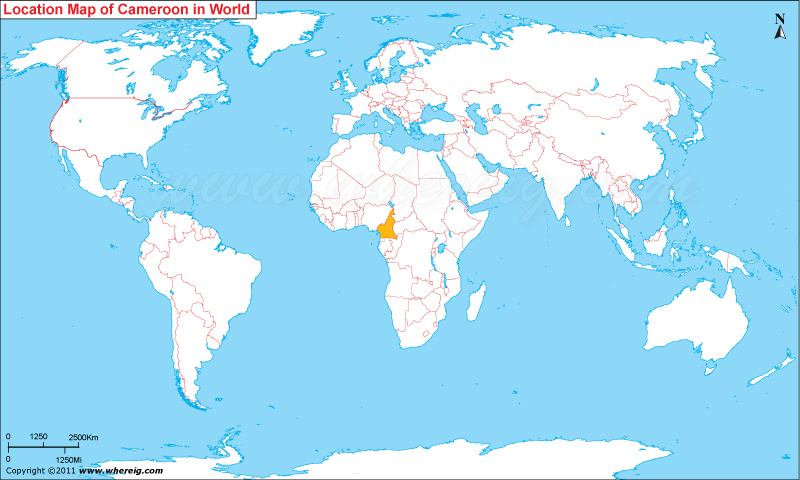
Cameroon on a Map of the World


A leader is that distinctive individual in a given community who is expected to possess, share and/or exhort qualities that are rare and progressive, and who is expected to act in a way that people can relate to. The leader is expected to be the most extraordinary ordinary man in the community he is leading and the exceptional individual with the uncommon touch to most, if not all of the social entities in the community. Naturally looked upon as the most important person in the community he is leading, the leader is expected to make most of the decisive decisions over the fate of his people, at most times with the counsel or consent of his people. The role of a leader in a given society is expected to be exemplary.


Being a leader carries power with it. However, it is the extent and direction of the utilization of that power for or against the interest of the community that determines the worth of the leader. Fundamental questions that cannot be ignored abound about the purpose of a leadership. But the question that dominates is this: What does the leader seek with the power?

    Is it to achieve glory?
    Is it to gain fame?
    Is it for the sense of elevation or for self-actualization?
    Is it to gain wealth?
    Or is it to realize an ideal that would be for the advancement of humanity (His people, related peoples or mankind as a whole)?

Most leaders with fame and glory as their ulterior motive, including those who seek power for an exclusive idea, eventually end up disappointing their people and giving a bad name to the idea they brandished. Contemporary examples are Stalin, Nicolae Ceausescu, Milosevic and Pol Plot.


Those who go for elevation and wealth end up as dictators, kleptocrats and megalomaniacs whose rule survive through an antidemocratic culture and oligarchic system based on repression, corruption and division (Social, ethnic, religious and racial).Examples abound especially in Africa with names like Mobutu Sesse Seko, Sani Abacha, Ferdinand Marcos, Idi Amin, Ahmadou Ahidjo, Paul Biya, Gnassingbé Eyadema, Jean-Baptist Bokassa etc.


Those wise leaders who strive to do their jobs by effectively utilizing the powers of their position to realize a purpose that is far above themselves, especially one that is for the advancement of their people or for the advancement (whether wholly or partially) of humanity, stand out as the consciences of their people and mankind. Living legends like Nelson Mandela, Jimmy Carter and Pope John Paul II; and dead legends like El cid stand out in this regard. These conscious and conscientious leaders are the movers of their times and the revolutionaries for revolutionary situations, demands or solutions. These are the leaders to enhance a right or right a wrong.


The seekers of fame, glory, elevation and wealth end up as heads of regimes or systems that are dominated by a clique that is out of touch with the rest of the community or humanity as a whole; a clique that uses repression, oppression, discrimination, terror, extortion, blackmail and crimes against humanity to stay in power. Even while surviving their people’s disapproval, such leaders are nothing more than cowards, negative perfectionists and long term illusionists.


It is true that the levers of power always produce an effect. Whatever the original intention and the effects of the utilized power, something that cannot be avoided is the resultant legacy that arises from the rule of a leader. The legacy can be positive or negative depending on how the people embraced the leader’s years at the helm of power. However, in striving for advancement, humanity generally tends to emulate positive legacies. Negative legacies, which are the embodiment of criminality, are always short-lived. The repetition of crime against a people is no history at all. The world has seen more than enough of such horrors.


It has been observed with clarity that most anti-people leaders who sought for fame, glorification and elevation, and who enshroud themselves in myths end up losing their attachments to the people; blinded by the drunkenness of power; and oblivious of the realities, needs and desires of the community they are supposed to lead. The ephemeral legacies of such leaders rarely survive them. In the aftermath of their deaths, anecdotes based on the worthlessness of blind power often arise, weaved by the very people they had trampled upon. Here, we find examples raging from ancient leaders like Sennacherib, Nebuchadnezzar and Nero, to contemporary figures like Hitler, Stalin, Pol Plot, Yeltsin, Mobutu, Bokasssa, Saddam, Idi Amin, Eyadema, Ahidjo and Biya.


In today’s world; in contemporary Africa that is lagging behind the rest of the world as a result of the negative legacies of leadership problems of the last century; in a Kamerun that is trying to give birth to “The People’s Rule” and a leader that can take the country out of its political lethargy and the impasse created by the fatiguing anachronistic French-imposed system, the search is for leaders that can lead their people to a future of world consensus, liberty, freedom and development. It is possible to achieve Leaderships capable of meeting those demands only if we find; the link between power and a positive legacy; the path to progress, freedom and harmony; and the restoration of our trust and self-confidence. Of great importance is the restoration of self-confidence, because in this expansive land that is haunted by negative legacies of misrule, betrayals, treachery, oppression, repression, corruption, distrust, ethno-centrism, racial and religious division; yet is being gradually pervaded by the liberating fervor of new and revived concepts, new ties, new visions and breath-taking strides at recovery through certain revolutionary paths that our backwardness demands; we are still haunted by a sense of victimhood. This sense of victimhood is an oblivious one and persists because of our inability to comprehend our situation. Yes, we are still traumatized. We are a haunted people, haunted even by ourselves. We need to liberate ourselves, create a new people, a new nation and new standards. Leadership, which is indispensable in realizing that liberation, must assume a revolutionary fervor, one that has the ultimate intention to bequeath a secured, progressive and advanced legacy to the generations to come.


Hard and merciless is the task of a revolutionary leadership in a revolutionary situation of taking the people out of an impasse where they are still highly haunted by the negative legacies of past misrules. With such a colossal task to overcome, a leader in a revolutionary situation is virtually left with little or nothing of his personal life. He is a slave to the radical or overwhelming process of change (revolution), and must be completely dedicated to overcome the accumulated past wrongs within a limited time frame. In his leadership role, he should expect to live a life of endless series of deprivations, self-sacrifices and nervous exertions. He should expect no reward in his life time, except the most satisfying feeling of all—self–fulfillment that arises from realizing the objectives of a cause that involves righting the wrongs of the past and giving the people the ability to live up to their potentials. Or if the leader finds such a cause of liberation and enhancement too demanding, he might abandon the revolutionary task, lead the people along a path that is midway between the horrors of the past and the revolutionary vision. Such a compromise would be nothing more than a procession of endless series of compromises which would neither fulfill the revolutionary objectives nor cause a return to the horrors of the past. Unfortunately, such compromises end up in futility. And with such an outcome, the revolution would be said to have lost its direction.


Today, in our communities that are still suffering from the wounds or scars caused by the negative legacies of bad leaders, true revolutionary leaders often find themselves plagued by time constraints, and likely get misunderstood by the people whose interest they are out to serve. This is so because the people whose lives the radical or overwhelming process of change is meant to advance often misunderstand the new rules and demands that:

    Things are done right in the interest of the people.
    Affairs take a straight course.
    Logical truths are revealed in order to avoid future mistrust and distrust.
    The leadership be genuine in their actions and intentions in order to create true understanding.

These are all necessary factors for the advancement of the cause for a positive change. Unfortunately these factors are sometimes perceived as indications of dictatorial tendencies when speedy but unavoidable implementation is attempted. Such a perception arises from the fact that the detractors fail to see the truth and genuineness of the cause because they have decided to close their eyes to the intentions of the revolutionary leadership and the objectives of the revolution within the frame work of time constraints.


The people’s revolutionary leader is always supposed to be on fire with love for his people and his country and should be prepared to confront danger at all times to ensure the establishment of liberty, freedom, development, progress and harmony. Yet, as a secular leader confronted by the horrors of the past and dedicated to ensure the prevalence of the people’s right over the accumulated wrongs they have endured, the people’s revolutionary leader may go to hell in the orthodox sense of things. Confronted by the colossal task of righting the wrongs from the past and faced with the resistance from the reactionaries who were the custodians and beneficiaries of the old system, the leader becomes susceptible to mistakes, despite his noble intentions.


The fact that the people’s revolutionary leader is determined to ensure that the wrong never again prevails  over the right, since it is impossible to convert all the reactionaries to change to live up to the demands of the new society and its democratic tradition, and because those who try to sabotage change and progress should be rendered impotent or even crushed for the sake of protecting and realizing the objectives of the revolution, the general advancement of humanity and the wellbeing of the majority who constitute the struggling class; the people’s leader in this revolutionary situation may act badly, acts which for the sake of progress and humanity are unavoidable. Such acts which in reality are tragic but necessary are right, even though in the orthodox sense of things might not be considered good. That is the fundamental cross of the people’s leader in a revolutionary situation when he is confronted by the desperate reactions of the custodians and beneficiaries of the old system. The right choices and decisions must be made to ensure that the people’s interest survives the situation and prevails over the wrong (the embodiment of our past horrors).


It is true that past revolutions have shown that few revolutions succeed, and even if they do, fewer of the few successful revolutions achieve their objectives. However, a critical analysis reveals that few of those revolutions were for an advanced ideal that was for the genuine interest of the people or for humanity as a whole. And even so, the principal reason for the failures or derailment of good-intentioned revolutions was that the leadership failed to bury the horrible past in all its wrongs. Some of the negative legacies of the past were merely given new clothing in the form of change. That is why firmness and the avoidance of delusional traits are expected from a revolutionary leadership.


While it is true that role of the people’s revolutionary leader is to inspire the people to strive for a purpose that makes them better human beings; the leader’s firmness in propagating the ideals may spew accusations of dictatorship. Nevertheless, we should not fail to figure out that true dictators are those leaders who cherish absolute power, praise and self-praise that is a reflection of publicity in its worst forms. But the people’s revolutionary leader who is wrongly perceived as a dictator is usually the good-intentioned personality who abhors extravagant praise, knowing that it belittles not only him the recipient, but also those who are expressing their approval or admiration for him in songs or words. The leader for the future should be someone who understands that absolute power over fellow humans—friends and foes alike, destroys the human touch, and places a leader in a lonely position in life in its real form. The leader with absolute power becomes a dictator who gets the publicity but is not popular.


Disheartening as it may sound, the dedicated, wrongly perceived, but good-intentioned revolutionary leaders tend to have few people who are truly close to them. The values they cherish are too scarce in the communities they are out to advance, especially in a situation where the genuine demands of the revolution outweigh the human and material resources necessary to realize the ideals of the revolution. In a curious way, the peoples’ revolutionary leaders are virtuous. Because of the sacrifices and self-sacrifices that they have made for their causes, they can be regarded as pursuers of a selfless dream in a selfish world, and in a way, lonely men in their overcrowded worlds. That is the harsh reality, which is all the more true because in a revolutionary state, many tend to have the revolutionary enthusiasm, but few are fully aware of the true essence of the revolution. It is for the above reasons that very few revolutionary leaders who have splendid legacies are worthy of canonization. Even those who can or have been canonized are or were sinning saints. Nelson Mandela accepts that too.

August 08, 1997                                                                      JANVIER TCHOUTEU


Tuesday, October 19, 2010

THE CONFLICTING FORCES IN THE SDF DURING THE THIRD PHASE OF THE STRUGGLE FOR A FREE, DEMOCRATIC, LIBERAL, UNITED AND PROGRESSIVE CAMEROON

It is hard to write about a political party that one put his future on hold for for more than a decade and that one defended as the vehicle through which change could be realized in Cameroon.  Nevertheless, for the interest of the future New Cameroon, for the noble ideals of the century old Cameroonian struggle, and for the sake of historical revelation, we have to confront the ghosts haunting us from that chapter of  Cameroonian and African history where a political party  that was  looked upon as a model, sold itself cheap because the head was rotten and the leadership did not believe in its revolutionary mission.

I have observed a passion by Fru Ndi backers to discredit all those who have ever stood up against the SDF chairman. The strange thing is that they go about advocating their cases without  using parameters.  What comes out of their write-ups because of that, is a subtle portrayal of Fru Ndi as a persecuted saint, a meek Christ-like figure that is not responsible for any of the wrongs going on around him or in Cameroon in general. In that blind attempt of painting everything black and while, these Fru Ndi advocates even denigrate those who have gone through their pilgrimage in life with a clean record of having taken upon themselves the colossal task of showing the people the true path to the future by living and putting the struggle far above themselves and their personal considerations, and sacrificing enormously for that. Having the Fru Ndi-like mindset that  “eating money from the government is okay because it is the people’s money”, they seem to see nothing wrong in the corrupting influence of that concept of accepting handouts from the system, something  Fru Ndi is guilty of doing.

After a careful observation I came up with this view of what the struggle within the SDF is all about and how the party degenerated into the abysmal state it is today:

1.      Firstly is that group that considered or came to consider the SDF’s creation as a bargaining chip to use to get a bigger stake in the government/or system.They never imagined that it could beome the party that would be expected to dismantle the anachronistic French-imposed system. There you have the Ben Muna, Basile Kamdoum, Siga Asanga etc (whether they also  had the ultimate interest of the people or only their personal interests in mind, we cannot tell). They never succeeded. I considered this group as the biggest retarding force in the SDF, especially during its early years. One sees logic in  the write-ups against them.

2.    You have this second group that originally shared the first camp’s perception, got drunk by the unexpected popularity that the SDF picked up less than two years after its launch, looked forward to controlling the stakes by taking power but lacked the stamina to engage in a struggle of attrition after the SDF in general and Fru  Ndi in particular were deprived of victory in the stolen presidential elections of October 1992 by Biya and its rigging machinery. But then with the control of the party in their hands, they in their unscrupulous ways figured out that they could still use their positions to eat from the  struggling masses they are purporting to be leading, as well as from the system. They are the biggest traitors to the exponents of change because the people gave their trust to them. That is Fru Ndi and his men. They are the ones who made fortunes from the SDF.

3.    The third group are those who partially or fully believed in the revolutionary objectives of the struggle, sacrificed or lost enormously and thought it was okay or not too bad until they observed or understood the extent of the money-making ring of the Fru Ndi mafia group (The second group) and decided to make a bargain too with the regime and system in power. I identify Mahamat Souleyman etc. in that camp.

4.    Then you have the fourth group of those who thought they were politicking and went about business in the SDF devoid of the all-embracing ideals or principles; either because they were tacitly for personal interests, an ethnic group, linguistic entity or region. Though against the system,  these are the so-called moderates or liberals or political clowns. They failed to confront the entrenched Fru Ndi camp in 2002 at a time when the SDF could have been saved (by siding with the last camp). Even though some of them are making the move now, it is belated, and to say that their intentions are something to die for is like playing the Russian Rolette. Here we find Asonganyi, Ngwasiri, Nyo Wakai, Nkemngu etc. You can determine for yourself the liberals, moderates and clowns from this group.

5.      Our fifth group fully or partially believed in the revolutionary objectives of the struggle, sacrificed or lost enormously and thought it was okay or not too bad until 2002. They openly or tacitly sided with the revolutionaries or genuine exponents of change in the party. In this camp are two categories. Those who stayed in the SDF and decided to act like the Fru Ndi camp and make up or recover the money they spent, and those who quit in 2002 and decided to return to get their so-called rewards for the so-called sacrifices made for the SDF. I say so-called sacrifice because there is no price for a sacrifice that is for an all-embracing struggle that is haunted by the loss of purposeful, righteous and virtues lives.

6.    As Ntemfac Ofege wrote, there are those who “left in a grand style” from Fru-Ndi’s trapped SDF in 2002. This sixth group are the figures we can look up to as the legends of the generation that led the struggle, either because they never betrayed/or because they confronted the malady of the Fru Ndi mafia in an effort to save the SDF and the Cameroonian struggle. These revolutionaries and/or union-nationalists who had rejected the system all their lives and/or who stood for the cause to realize a total and complete change, sincerely believed in the virtues of a selfless cause for the benefit of future generations. The late Dr Samuel Tchwenko, Albert Mukong etc belong with that group. We should emulate their ideas, especially the tested ones in this group who have already gone through their pilgrimage in life without falling short in the all-embracing struggle for the future New Cameroon.

I have observed diehard Fru Ndi supporters and apologists bundling the sixth group with all the others. It shows incomprehension on their part or dishonesty in their souls. Simply, the conflict today in the SDF is mostly between two opposing camps that lacked a vision for the New Cameroon from the onset.


The first camp comprises the second group above (The Fru Ndi group) and figures in the fifth group, as well as those suffering from incomprehension). The second camp constitutes the first group (Muna-led group) backed by the third group and those suffering from incomprehension as well as elements in the fourth group.

I hope this clarifies the haziness many have about the futile ongoing in the SDF.

Saturday, October 16, 2010

HOW COMMITTED ARE CAMEROONIANS IN THE STRUGGLE TO CHANGE THE FRENCH-IMPOSED SYSTEM AND THE BIYA DICTATORSHIP


There is a need and desire for change in Cameroon. That is something we all agree about. Pundits acknowledge the fact that the majority of the Cameroonian people are living in uncertainty and poverty, while the unscrupulous minority in the clique, which constitutes the present oligarchy, are living in affluence and arrogance. This criminal minority has hijacked our prosperity, our future and our dignity. Their affluence, which is made pervasive by corruption, nepotism, ethnocentrism, regionalism and waste, has blinded them to the point where they are completely indifferent to the plight of the majority of Cameroonians who are living in poverty and deprivation.  It is not the concern of the Biya regime that its fair-minded citizens are starving, that they are inadequately clothed, that they are excluded from effective sanitation and medical care, and that they are being prevented from the possibility of having a job. It does not bother the Biya regime and its collaborators that the Cameroonian children who are the major asset of this nation are being deprived of their right to education and training. The Biya regime is even arrogant in its misrule by denying us our basic human rights, our freedom and the right to choose. It is even clear that this oligarchy is bent on denying us the access to our own brains. They expect us to stay docile or mute like dummies. The wrongs of the Biya regime are inexhaustible and cannot be justified. The true exponents of change are those who reject everything that condones the exploitation and oppression of one man by another and tags the exploiter and oppressor with the justifiable word “WRONG”.

In the struggle against the perpetrators of wrong, we are right. However, being right or being aware of the right and not ensuring its realization is a wrong in itself. We need to know that the task confronting us today is that of overcoming the wrong (the French-imposed system) and realizing the right (The New Cameroon through the Cameroonian ideal embodied in its union-nationalism).  This task of overcoming the wrong is so colossal that many of us are divided over the approach to take and the extent to go. Over the years, each time that the  exponents of change think or try to act in doing  something about our plight, the question of how far we  can go in correcting, dismantling and building crops up  to divide us. This division is all the more disheartening and confusing due to our varying degrees of commitment to change. Why there should be this division while we are confronted by the agonizing wrong of the anachronistic French-imposed system is something few mortals can justify. However, we can clearly discern the divided forces:

1)            Firstly are the ignoramuses, the indifferent, the skeptics and the cynics:
·        The ignoramuses who fortunately constitute a small minority of the Cameroonian population are those who do not truly know what is theirs by right (their freedom, liberty and share of the Cameroon’s wealth) as citizens of the nation. It is because of their ignorance that they extol the custodians of this system for the handouts dished out to them, without being aware that they are being given hardly a decimal of what is theirs by right that has been stolen from them by the Biya regime. Make these ignoramuses to understand that their pathetic state, which they themselves abhor, is the responsibility of the system, and then we can rest assured and even boast that we have won powerful converts. Explain to them the objectives of the struggle and the turbulent phases it has gone through, and we shall be certain that we have trained the most reliable soldiers for the cause. These ignoramuses are aware of the fact that the handouts from the Biya regime cannot alleviate their misery.
·        The indifferent are aware of the Cameroonian plight, but because they are in secure or comfortable positions, or because they have lost hope and are weary of the struggle, they have chosen to close their eyes, block their ears and pocket their noses. In short, they refuse to see or comprehend the wrong. What they need is a fresh spirit and a forceful engagement.  And in a way, they can be made into remarkable assets for change.
·        The skeptics and cynics can be said to want change, but doubt or distrust the change that the majority of Cameroonians are striving for. This may be due to their rigid attachment to outdated concepts, ties, futile dreams or their envy for not being the pillar in the struggle. They are perhaps the most retarding force outside the system.

2) The second futile or less committed force in the struggle for change are the liberals and moderates:
·        The liberals accept the fact that the French-imposed system is anachronistic and unworkable and that it should be changed. However, they cannot come up with a realistic approach to change the system and an alternative system to replace it. It is because of their despair and fear of any action that would have to change the wrong system that they would engage in uncommitted moves or actions based on conciliatory rhetoric that instead serves the interest of the system than that of the struggle. When their rhetoric become indefensible, at a time that the true exponents of change have their backs to the wall in the tight corner of oppression, repression, extortion and deprivation, and see no other relieving option except the path of liberation (protest and resistance), our liberal in his deceptive ways opts out, which basically is giving in to the oppressive power of the system. However, the liberal would continue to talk of the wrong, agonize over it, and yet stay unwilling to fight against it because in his minor mind, the price for challenging the French-imposed system may result in more misery than it is presently the case. However, the liberal fails  to understand that though misery may be the price, it  would be temporary and would end oppression and  release the emotions, spirits, ideas and assets, which  are all democratic and development forces that would  ensure prosperity and security for the people. We only have to look at Bello Bouba Maigari, the leader of the National Union of Democracy and Progress (NUDP), to understand what I am talking about.  The bed partners of the liberals are the moderates.
·        The moderates also talk and work for change through the struggle without intending for a fundamental one.  It is because of their desire for a partial change of the system that they have detached themselves from the present day Cameroonian reality and embraced a utopian notion of conciliation that promises nothing for the Cameroonian people .A clear example in sight is Adamou Ndam Njoya of the Cameroon Democratic Union (CDU).

Unfortunately for us in the Cameroonian struggle, these liberal and moderates constitute a potent force on the side of the exponents of change and easily whip up the support of those exponents of change who are without the revolutionary zeal or comprehension of  the struggle for the New Cameroon framed on Cameroon’s union-nationalism. The greatest deception about these liberals and moderates is that they boast of their attachment to sobriety and the Cameroonian reality, which to them is devoid of a dream. But our struggle is basically that for the realization of our dream of true independence (unity, prosperity, freedom, self-confidence and an equal place in the community of nations). This true independence would culminate in interdependence with other progressive groupings and nations as an extension of our fraternity.

3) The third force are the confused and one-sided who  are fervently fighting for causes that do not address  the general Cameroonian plight, but rather address the plight of an ethnic group, religious belief, region or linguistic entity. The fact that they are deeply attached to their belief in the righteousness of their cause, and the fact that they consider all those who are not fully behind them as their enemies, this one-sided and confused force for change (which by their demands call for partiality), not only alienate themselves from potential allies for change, but also alienate themselves from the general objectives of the Cameroonian struggle that encompass their plight.  And in a curious way without them really knowing it, they stall the wind of change because of their divisive actions and directions.

Unfortunately for the Cameroonian dream and the struggle, the true exponents of change, i.e. those who want a fundamental change of the system, are not fully organized. But their advance representatives who  have fully mastered the demands of Cameroon’s union-nationalism can whip up the support of the  ignoramuses, the indifferent, the skeptics and cynics,  the liberals and moderates, and even the confused and  one-sided, in order to give the Cameroonian people the  true sense of purpose and direction that has eluded so  many over the years. That would be when we would be capable of getting rid of the mentality that has been created by the French-imposed system. With that step taken, Cameroonians would evolve from that stage of just wanting change to that of working for and realizing it. Such a prospect is possible only after we have cast aside our despairs and unwarranted suspicions, and blossom with the joy and exhilaration that the original Cameroon dream holds. Then hand in hand as committed union-nationalists, we would shout a loud No to the system, give it the final push to ensure its collapse and burial, and then see to it that the stinking corpse of the French-imposed system represented today by the Biya regime never rises again to haunt the new humanized Cameroonian system, which was realistically conceived in 1910.


 March 23, 1995                                                         Tchouteu Janvier