Tuesday, September 21, 2010

CAMEROON’S UNITY AND THE HOPES, DREAMS AND FEARS OF THE KAMERUNISTS (UNION-NATIONALISTS OF CAMEROON)


Cameroon on a Map of the World

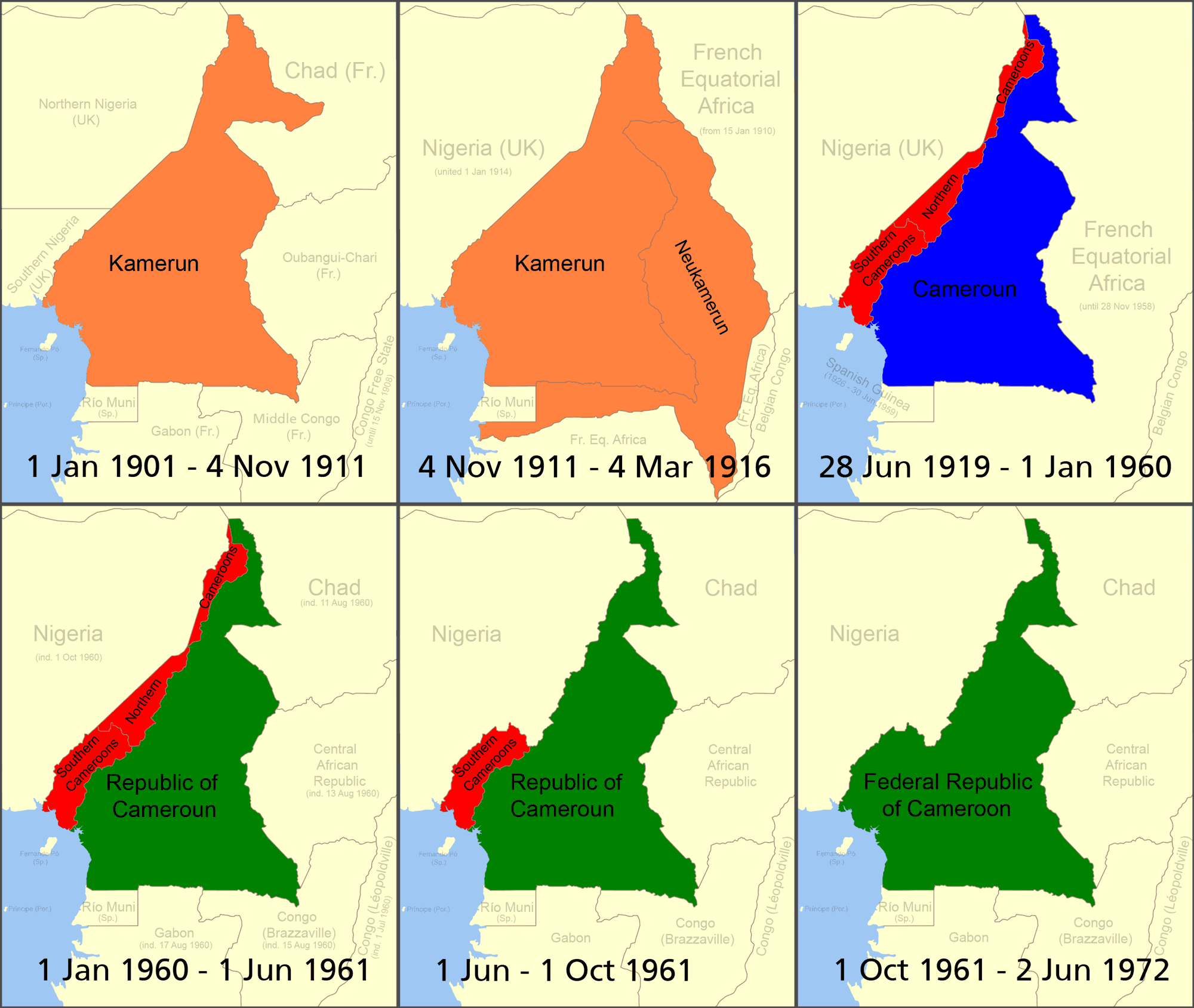


The union-nationalists of Cameroon(Cameroon's civic-nationalists) are pragmatic revolutionists, progressive reformers or radical evolutionists. These are men and women who grew up being what they are more as a confection of circumstance than of what was bestowed upon them by birth that gave them a social identity. These people greatly developed or did not suppress their human touch. Unlike most, they do not find it easy to live without the slightest spasm over the pains and suffering of their fellow compatriots. Unlike most, they have put their purposes far above personal considerations and even above their personal interest, an uncommon quality. By dwelling on their sense of humanity, they consider the alleviation of the pains, turmoil and nightmares of their compatriots over the alleviation of their personal well-being. It is because of their all-embracing humanitarianism and deep awareness of the Cameroonian reality that they accepted the fact that the demanding task of alleviation cannot be based on individuals who are so many and complex as separate entities. Cameroon’s union-nationalists are acutely aware of the fact that the task of alleviation should be for the entire Cameroonian people. They know that Cameroonians have been dishonored, oppressed and traumatized en-masses and not separately.

Permit me to call Cameroon’s union-nationalists the advanced Cameroonians. These exceptional groups of patriots, who have been shaped by circumstance and have a clear sense of the meaning of life, have never been allowed to the helm of power in the country’s political life. With legendary origins and a gruesome past, they are the best reflection of Cameroon itself. Cameroon’s union-nationalists are aware of tribal, ethnic, religious, cultural and linguistic sentiments; however, they have not allowed these to blind and overwhelm their reasoning for a progressive Cameroon. They are aware of the fact that Cameroon’s chronic malady lies in its anachronistic institutions, complete dominance by France and a detached oligarchic leadership. It is the different sentiments and workings of the French-imposed system that has shaped individual Cameroonians to varying degrees and constrains them in their drive towards authentic change and progress. However, Cameroon’s union-nationalists in their advanced ideals are those exceptional compatriots who have detached themselves from the shortcomings of the system and the blinding sentiments of tribal, ethnic, religious, cultural, linguistic and social ties. They stand as the epitome of the renewed Cameroonian.

Since becoming a distinctive entity under the German colonial rule eleven decades ago, Cameroon has occasionally conceived of liberation movements that would have advanced the nation into a better position had these civic-nationalist forces been successful in their cause.

In 1910, Martin Paul Samba (Mebenga Mebono), the first Kamerunian civic-nationalist leader realized that the progress and glory of the land rested more in a future that was devoid of colonial control and permeated by progressive Cameroonian concepts. He began one of the earliest liberation movements in Africa and the first in black Africa. However, time and fate caught him short in his campaign to rally the full support of the peoples of Kamerun. Cornered by the German colonial army near Ebolowa in 1914, he opted for surrender rather than face the massacre of his people. In August 8, 1914, Martin Paul Samba was executed, a day after the execution of his close friend and ally in the name of Rudolf Duala Manga Bell. That was the first trauma to Cameroonian civic-nationalism in the hands of the German colonial army, leading to defeat in the first phase of the Kamerunian struggle and to dormancy for its nationalism for years to come. It was such a deep trauma that even after British and French forces defeated the German army in Kamerun in 1916, no civic-nationalist force emerged to defend the territory from partition by the victorious European powers.

This partition of Kamerun into British Cameroons and French Cameroun, and the ensuing mandatory rule unfolded consequences of a disruption of past economic, political and cultural ties, as well as their resultant usage. Moreover, it is the shortcomings of partition and the disruptions that are haunting Cameroon’s unity today. The imposition of separate English and French administrations in the land as agreed in the mandate formula only created systems that had little in common with pre-colonial experiences and that were out of touch with Cameroonian reality at the time.

Yes, it was due to the regrettable partition that Cameroon’s civic-nationalism was rekindled three decades after, with a union content this time around in its quest to reunite British Cameroons and French Cameroun. It began in French Cameroun in 1948 under the UPC (Union of the populations of Cameroon) and spread over into British Cameroun where OK ((One Kamerun) and the KNDP (Kamerun National Democratic Party) championed it. The goals of both the English and French-speaking union-nationalists in the 1950s were to reunite the two territories and pursue the ultimate Cameroonian dream. The New Cameroon was envisaged to:
·       Build a genuine bilingual ethos.
·       Bridge the gap in the development of the English and French-speaking sectors.
·      Work for the evolution of a New Cameroonian people from the different breeds of thoughts and actions of its francophone and Anglophone children.
·     And create a democratic, liberal, free, progressive, united, strong and developed Kamerunian nation.
 

Leading exponents of this Cameroonian dream were Ruben Um Nyobe, Felix Moumie, Albert Kingue, Enerst Ouangie, Leonard Bouli, Etienne Libai, Ossende Afana, Nde Ntumazah and John Ngu Foncha. The majority of Cameroonians looked up to those legends of their times in the struggle to realize the Cameroonian dream propounded by Martin Paul Samba.

Imagine what Cameroon would have been today had its liberation fighters and union-nationalists been allowed to their devices to build the post-independence Cameroon. That was never the case. France was determined never to let go of its control of Cameroon, its African pearl. The French imposition of the system that persists in Cameroon today, and the installation of the puppet Ahidjo regime concretized the French plot that preceded the banning of the UPC in 1955.

This ruthless ten-year war to eliminate all aspects of UPC influence in the country, a genocidal campaign that saw the deaths of close to a million Cameroonians in the hands of French and Ahidjo forces resulted in an effective defeat of Cameroon’s union-nationalists in the second phase of the Cameroonian struggle for independence, democracy, enlightenment, progress and development. Ruben Um Nyobe, Felix-Roland Moumie, Ossende Afana, Ernest Ouangie and several others in the UPC leadership were eliminated and the rest were either hounded into exile or cowed into capitulation by the French military and the  puppet regime they put in place in Cameroon under  Ahmadou Ahidjo. It was the death, exile and capitulation of the heads of the second phase of the Cameroon Struggle and the smug complacency of the Cameroonian people that began Cameroon’s infantile malady, a malady that has replaced hopes from a dream with fear and despair instead.

Imagine what Cameroon would have become had Anglophone and francophone union-nationalists realized its reunification, independence and governance. Had that been the case, the following would have happened:
·        The New Cameroon would have been born with an authentic and firm foundation.
·  Cameroonians would have realized most of the union dreams (the objectives of reunification and independence).
·         And in no way would the pressing legacies of partition still be as glaring as they are today.
·        The continuation of the UPC liberation war against the persistent French army in Cameroon and the post-independence Cameroonian army of Francophiles(pseudo-nationalists) would have been avoided.
·        Then the deaths of close to a million Cameroonians in the hands of Ahidjo and French troops would not have happened, a nightmarish genocide that still haunts Cameroonians. Those deaths imbued Cameroonians with a sense of skepticism, cynicism, despondency, treachery, dishonesty and self-centeredness; and traumatized them into a state of political lethargy.

Today, most Cameroonians agree that the human obstacles to nation building lie more in the fact that reunification and independence were achieved by good-intentioned Anglophone union-nationalists and a Francophile Ahidjo regime that had little respect and knowledge of Anglophone aspirations and the collective Cameroonian dream (the objectives of reunification and independence). Ahidjo was put in power to defend the interest of those in the French political establishment, his collaborators and his ego. He was prepared to do that at all cost. Yes, it is this legacy of power retention, oppression and division that the Biya regime inherited and is excessively, shamelessly and madly strengthening in order to maintain his hold onto power. Yes, the shameful Ahidjo regime betrayed the dream of reunification and independence and conceived of the virus of distrust, disintegration and dishonesty that the Biya regime has proliferated to suffocate the cherished Cameroonian state. This is a virus that has almost eroded our dynamic spirit and progressive values, leaving us with the looming specter of despondence, which threatens to doom Cameroon.

The reunification spirit and its all-embracing dream were the dominant factors in our political lives before the quasi-independence/reunification of the land. Nevertheless, it was the Anglophone community led by English-speaking union-nationalists who realized reunification. The role of Anglophone union-nationalists is the most patriotic to have been realized and the entire force of Cameroon’s Union-Nationalism holds the people of the former British Southern Cameroons highly for that. Still, the ultimate Cameroonian dream, which is the responsibility of both English-speaking and French-speaking Cameroonians, has not been realized. The responsibility for that setback lies entirely with the French political establishment, Francophile regimes of Ahidjo and Biya, and their Anglophone collaborators. The unfortunate thing is that the Anglophone community has been the most betrayed. However, we must be honest with ourselves by accepting the fact that the entire Cameroonian people have been betrayed by the French-imposed system and that in our different ways, we too contributed to the success of the French-imposed regimes.

Today, it is getting to five years since the resurgence of Cameroon’s union-nationalism. However, the years of lethargy still haunt the Cameroonian people. The questions now are:
·        Must we allow the Cameroonian dream to die?
·      Must we allow the realistic beliefs of the majority of Cameroonians for almost a century to end up as an illusion because France and its accomplices of unpatriotic and anti-nationalists Cameroonians do not cherish them?
·        Must we allow Cameroon to disintegrate and fail the drive for reunification that was given a positive response in the 1961 plebiscite by British Southern Cameroonians, and gallantly fought for by the majority of former French-Camerounians, just because a treacherous minority that constitutes the French-imposed establishment does not care?
·        Must we allow despair to overwhelm our century-old dream and us?
·        Should we betray our fallen legends and heroes because the price for rejecting the French-imposed system is too high?

No, the union-nationalists of Cameroon would not. They would not betray their ancestors, their dream, their heroes, their history of resistance and themselves.

Cameroonians would not surrender to despondency. They would continue the struggle against the oppressive and exploitative political influences in Cameroon in the guise of the current system. They would continue relentlessly in the struggle to eliminate the destructive aspects of the years of partition and Ahidjo-Biya rules.

Cameroonians would never surrender in the struggle against the anachronistic French-imposed system and the Biya regime. They are determined to continue in the struggle to eradicate the disheartening despair, division, cynicism, dishonesty and self-centeredness that have gripped the once noble Cameroonian soul. That is the will of the union-nationalists.

They are determined to continue hoisting the flag of the Cameroonian struggle to a logical conclusion. That commitment is not a matter of words. It is a difficult, demanding and selfless struggle―a task demanding actions, sacrifices and steadfastness. If we all get out of our lethargy and join the cause, all would soon be won; and we would not regret that we failed to save our nation from disintegration. That can be achieved only after we have discarded our self-centered attitudes and banish the negative legacies of partition and Ahidjo-Biya rules to the dustbin of history. 


November 4, 1994                                                   Janvier    Tchouteu 


Sunday, September 19, 2010

STALIN'S HICCUP

One day Stalin came to a meeting of the politburo and discovered that he had "lost" his brief case and couldn't find it... Every single member of the Politburo was terrified because they knew that they would be accused of taking the brief case...and sure enough... the politburo was arrested.

Sometime later, Stalin found his briefcase and came back to the meeting room...

"Bring back the politburo....I have found my briefcase," Stalin said.

"Too late" replied Beria, the head of the Secret Police...."Every single one of them  has confessed."


Janvier Chouteu-Chando is the author of THE UNION MOUJIK 

The Union Moujik

The Union Moujik

by Janvier Chando, Janvier Chouteu-Chando , et al.

Wednesday, September 15, 2010

TERROR: POLITICAL WEAPON, SOCIAL INFECTION, DEHUMANISER


Terror or terrorism is the indiscriminate use of threats and violence for political purposes. It is perhaps the simplest strategy that a powerless or weak group or organization fighting an organized establishment is tempted to use. The nature of the organization of most terror groups, their support structures, and their objectives often constrain them, forcing them to operate:
  • within a tight inner circle,  
  • with a great deal of fanaticism, 
  • with limited and thinly spread manpower, 
  • with  light and limited materials or weapons, 
  • And with a clearly defined objective to bring down their opponents.

Perpetrators of terror with a clearly defined political objective are usually men who are highly committed to a cause but have little or no regard for the nature of its realization. These are people who stretch the notion of the phrase “Tragic Necessity” to the utmost, pitting their causes against humanity.

Terror is a powerful political weapon with a far-reaching social effect. And the recoil effect of an act of terrorism is unpredictable.

As a political weapon, terror might appear to be the most potent option by frustrated but committed advocates of a cause that has been sidelined, snubbed, and denigrated; or by a cause whose activities and members have been suppressed, repressed, and decimated by its opponents, the establishment or the government. These advocates of terror often see themselves and their ideas as potential victims of annihilation at a time when they think they lack the means to openly resist. How far the organization embraces the methods of terror determines the degree of its dehumanization.

Terror fully embraced is more sinister, threatening, and sustainable if it has a base from which to recruit, train, regroup, and replenish. The unacceptability of terror hinges the most on its social effects. And it can be very far-reaching indeed.

The use of violence and threats by a movement against a free, democratic, liberal, progressive, and humane society to intimidate or coerce it, always backfires, with the movement losing its humaneness and purpose in the process. Society in all its strata rejects the movement tainted by terror even if its cause promises to advance the wellbeing of the people. It was the case with the German group Baadar-Meinhof, The Italian Red Brigade, The Japanese Red Army, and FARC-EP of Colombia today. Even the Shining Path of Peru lost its purpose and folded because of the country’s democratization and liberalization. And attacks by the Basque groups ETA (Euzkadi ta Askatasuna) only go to denigrate the genuine grievances of the Basque people. The list is inexhaustible.

Acts of terror by a group or country against a foreign state, especially a free and democratic one, always have the opposite effect of uniting and mobilizing the state that is being terrorized. It makes the victimized state to appreciate its humane values all the more while enabling it to plug the loopholes that make it susceptible to acts of terrorism. The Irish Republican Army (IRA) actually got weakened in its fight against the British because of that. Palestinian Movements tainted their genuine cause with terrorist acts against Israel. Even the Separatist Chechen Movement is ruining its case with attacks against Russian civilians. The Lockerbie bombing and the 1994 Argentina bombing by suspected Iranian agents only strengthened the victimized countries. Above all, the country or group that accepts the use of terror even against the civilian population of the country they are against, ultimately ends up dehumanizing its own society. That is because a policy of hate that justifies the killing of noncombatants, women, and children always turns out to be xenophobic and full of lies; and it feeds on hypocrisy, brainwashing, ideological extremism, or religious fanaticism, which are all shortcomings that will ultimately lead to the demise of the propagators of terrorism and the breakdown of progressive human values in their own societies.

With a base, terror suddenly unleashed against an unpopular, oppressive, repressive, discriminatory, detached, and elitist regime or government has an initial paralyzing effect on society in that it infuses fear, doubt, and a sense of vulnerability into the minds of the oppressive class, while at the same time it stirs the common people into believing that the system they too are against could be brought down. The unleashed terror destroys the confidence the custodians of the repressive system had before, especially in their conviction that they could get away with all their actions against those opposing them. The oligarchy suddenly becomes chaotic in its procedures, planning, and execution of its strategies. The offensive nature of their rule becomes defensive all of a sudden without due preparation. The army and security forces, the administration, and the other agencies and organs enforcing the repression, oppression, fraud, corruption, discrimination, and violence become momentarily immobilized in the initial phases of terrorism. With the terrorists striking at every possible target and with casualties rolling in, the custodians of the dictatorial system start questioning the justification of their policies, the prize they are willing to pay to stay in power, and the chances they have in sustaining assaults from the terrorists. The foot soldiers of the regime (security agencies and intelligence services) that are the shields of the system or regime but not its benefactors, but who trace most of their origins from the majority of the people, start wondering why they have to bear the brunt of the anger against the system when they are not really responsible for it. Why would a patriotic corporal, inspector, captain, lieutenant, colonel, commissioner or general; why would someone who truly loves his country, wishes for its redemption, and aspires for a better role in defending his nation, risk his life and the future of his loved ones by standing against the fire aimed at a corrupt, undemocratic, discriminatory and anti-people system and regime, while the leadership and its clique (the oligarchy) continue to swim in affluence and security? Why would these security forces risk their lives to maintain people in power who do not truly appreciate their worth?

The answer to the above questions is simple. The defenders of the system would fight the terrorists to the bitter end only if they were convinced that the new order the terror organizations would bring with them would be far worse than the current reality.

Still, one cannot ignore the traumas in a society haunted by terror. Besides its infusion of fear and doubt into the establishment, and its destruction and immobilization of the tools of administration, terror as a political weapon used in a society that is not free, has the powerful effect of polarizing it. The unleashing of terror opens a conflict that:
  • Pits the repressive oligarchy against the terror group, leaving the patriotic majority in the cold in their demands for democracy, freedom, and liberalism.
  • Finds the haves and have-nots drawn further apart.
  • Widens the gap between the ignorant and the enlightened.
  • Sets the docility of the old against the vibrancy of the young in their quest for freedom, democracy, progress, and transparency.
  • Finally brings the idealists against the realists, the pragmatists, the humanists, and the dogmatists.
The use of terror in a genuine cause of freedom or liberation against the oppressive rule of an unrepresentative establishment becomes susceptible to blackmail, mistakes, and dehumanization. Even its limited use without a clearly defined direction exposes the majority of the soldiers and militants of the freedom or liberation struggle to the cruelest and unusual punishments from the oppressive system or establishment. The custodians of the system respond to the acts of terror with vile actions or remedies of their own that are in effect state terrorism. Inhuman in its content, the oppressive establishment nonetheless wins sympathy from the general population and the world at large. The regime suspends human rights; the regime goes further in its excuses and carries out preventive arrests, vile tortures, subornation, and extensive legal murders (through questionable laws); and the regime executes cruel, vindictive, discriminatory and the most unusual punishments against those who oppose them, thereby bundling the terrorists together with the progressive forces of the land that are advocating for liberty, freedom and/or liberation. Having lost the last elements of its humaneness, reacting out of proportion to the threat posed by the terrorists and the freedom demanded by the majority of the people, the oppressive regime or the unrepresentative system in power presses on with open state terrorism through divide and rule by channeling its resources to stir deliberate violence and internal strife. In its desperation, the oligarchy strikes blindly and calculatingly in turns. The innocents find themselves being hit more than opponents of the system by both the establishment and the terror groups, with the terror groups finding themselves blamed for everything. This social chaos degenerates into civil strife with clans fighting against clans, tribes against tribes, religions against one another, races drifting apart, and the different classes becoming irreconcilable. In this situation where terrorism against the state loses its purpose, terrorism by the state prevails and saps the oppressed and freedom-loving majority of whatever little strength they might have left, forcing them to settle for any order the oligarchy can restore. In this case, the terror group’s failure strengthens the dictatorship in power, enabling the system to last longer, even though it actually financed its state terrorism using the public treasury and the sweat of the citizens.

A candid evaluation would, however, reveal that despite the possible glorification of terror by groups or people who feel cornered, the fact that the specter of mistakes or unfortunate accidents looms high takes away its efficacy. Where and who should be the targets? What is the purpose or objective?

A humane exponent of change who convinces himself that the use of terror is tragic but necessary in a tormenting situation, risks corrupting his soul in the process, especially if his action gets out of control. Even the line that the use of terror should only seek to attract attention to the genuine cause of the unheard and neglected, is basically faulty because the use of terror often or always ends up as a boomerang. A genuine and popular cause tainted with terror that is ill-organized, poorly-targeted, and not clearly defined; one that strikes at the establishment and results in civilian casualties as well, finds itself open to sabotage and blackmail.


The use of terror as a rule by genuine exponents of change is unacceptable. It subjects the movement to defeat, especially if it becomes a weapon of any duration. While a movement might be forgiven for using it as a spark, the shout that would immobilize the system and set off the avalanche, the effect of terror is corrosive against everyone and everything that it touches. And any duration in its utilization would blind the essence of the movement’s true purpose, taking out the humanity embodied in struggles that involve freedom, liberation, democracy, prosperity, and human harmony; and as a consequence, it would open the ranks of the movement to blackmail and denigration. The most moral of men, the sanest of freedom movements, the most dedicated of revolutionaries, and even humanists of all stripes end up losing their purpose if they fail to consider the corrupting influence of terror, even in its short-term use, and especially when they fancy the use of terror as the rule or weapon of survival even against an inhuman establishment. By using terror, they end up betraying the hopes and aspirations of the struggling masses whose interest terror was first invoked to safeguard.


Short-lived Clearly targeted, purposeful, and organized terror in the activities of the ANC, SWAPO, ZANU-ZAPU, and FRELIMO pushed the establishments in South Africa, Namibia, South Rhodesia (Zimbabwe), and Mozambique respectively to enter into a dialogue that brought the changes that enabled these liberation movements to win power democratically in those countries. The Islamic Salvation Front of Algeria lost its essence because of its blind adoption of terror. Communism considered by some pundits to be the most humane ideology in advocating for the economically and socially deprived lost its humaneness as a political force because of its initial embrace of terror. Lenin’s short-term use of red terror during the Russian Civil War that followed the communist revolution was blown out of proportion when Stalin made it a rule of the Soviet system and a legacy that is haunting the communist ideology today. The examples of the fallouts from the use of terror are inexhaustible. That is why movements that are trying to advance humaneness should become self-critical when their leaders start flirting with terrorism.
.
In the case of Cameroon, the fact that the price for dislodging the system is high does not mean that effective use of terror against the establishment is the only option left. While it might appear attractive to some opponents of the Biya regime and the anachronistic French-imposed system as a whole, exponents of change should bear in mind the fact that even the most effective use of terror against the custodians of the system would likely denigrate the noble objectives of the century-old  Kamerunian struggle and cloud the realization of the future New Cameroon. 

True an effective use of terror against those in the oligarchy with blood on their hands will mortify the system. True it would open public debate and help to clearly identify the camps. And true it would indicate the seriousness of the forces advocating for a Cameroon that should have a place among the community of free, progressive, and civilized nations. But it would tear society apart and dehumanize it in the process, to an extent that its soul might even get more corrupted than it is at the moment. Mindful of the fact that some exponents of change who oppose the use of terror acknowledge the fact that its use would force the system to take the oppressed struggling masses seriously and make the establishment to understand that their opponents can create a perpetual nightmare by making terror the rule in their struggle, exponents of change should never consider the use of terror in their quest to found the New Cameroon that is free, democratic, united, liberal, progressive, prosperous and pluralistic.

The war of reunification and independence that the UPC (Union of the Populations of Cameroon) was dragged into, following its prohibition and its suppression by the French Trusteeship Administration in Cameroon in 1955, is a classic case. The limited use of terror by the popular liberation movement against the forces that massacred and carried out a genocide against the Cameroonian population ( French forces and the forces of Ahmadou Ahidjo ― the puppet France installed as president of Cameroon),  as well as against those the UPC considered traitors, was effectively used to give the popular Cameroonian movement a bad name as a blood-thirsty terrorist group. Thanks to state terrorism, the UPC was denigrated, repressed, and crushed and most of its leaders were killed, imprisoned, or exiled by the Franco-Ahidjo alliance. It was a campaign that went hand in hand with the blackmail and framing of the movement while stigmatizing the UPC support base. It was so effective that the strongly victimized Bamileke and Bassa populations are still the target of stereotypes hatched by Jacques Foccart, the architect of French control in Africa, who did an effective job in presenting the UPC’s war of freedom or liberation in the 1960s as a post-1960 ethnic revolt by the Bamileké and Bassa populations, thereby effectively casting the country’s largest and most nationalistic ethnic group as a national enemy of the rest of Cameroonian peoples, a stigma that still haunts the country today. And men like Jean Forchive etc owed their rise and prominence in the system to their successful use of state terrorism against the UPC.


There is a strong faction in the current Biya regime that envisages the eternal survival of the system through the careful use of state terrorism against the patriotic majority who are being allowed to use their voices, but not their hands and feet, in a sham process that allows for multi-party politics in Cameroon but that prevents democracy from taking roots by denying the people the rights to choose through sham elections that make a mockery of democracy and freedom of choice.


In a nutshell, an organization that uses terror against an establishment, be it its home country or a foreign country, risks tainting itself forever, corrupting its essence, and plunging society into a process of dehumanization that might take decades and even generations to overcome.

Janvier Tchouteu

November 08, 1997