Sunday, December 26, 2010

ADVOCATES OF THE FUTURE NEW CAMEROON

Anybody who is not aggrieved by the traumas that the Cameroonian people have experienced in their  one-hundred-and-twenty five-year history(German colonization and pacification, Anglo-French  partition and pacification, disproportionate contribution  of man power and resources to the Free French Forces in liberating Francophone Africa and France, the decimation of the population for standing up to French duplicity over the cause of reunification and independence---UPC-failed liberation, the betrayal of the people in their reunification dream,  the half a century French-imposed anachronistic system, the dictatorships of Ahidjo and Biya,  and the subjugation and dehumanization of the Cameroonian people) is heartless; but that person who  strives to  return the land to any of its past states is brainless.

Despite our traumas, our future rests in a New Cameroon that rehabilitates itself from all the ills of its past and harnesses its enormous potentials to build a great producing nation where the powers emanating from its levers of government would ensure peace, prosperity, liberty, development, justice, freedom and security for all Cameroonians irrespective of their creed, religion, ethnicity, and social and economic status.

Only when the dignity of the Cameroonian people has been given back to them, only after the nation becomes organized to the point where it guarantees a promising future for its children, then and only then would the advanced Cameroonian nation guided by its all-embracing ideal of Union Nationalism, take its special place in Africa and play its destined role in the realization of Africa’s economic union and political integration.


Janvier Tchouteu                                                                      February 2009


Janvier Tchouteu, author of “FALLEN HEROES: African Leaders Whose Assassinations Disarrayed the Continent and Benefitted Foreign Interests”

https://amazon.com/dp/1980996695/ref=cm_sw_r_tw_dp_JX6Q26H573RSKG7HT9V6


Janvier Tchouteu is the author of " The Mistakes To Be Avoided in Building The New Cameroon"

Tuesday, December 21, 2010

THE PATH TO THE FUTURE NEW CAMEROON TAKING COGNISANCE OF SECESSIONIST TENDENCIES.

Those who died in Bamenda on May 26, 1990 were not for the cause of an independent state from the North West and South West provinces. They were not Southern Cameroon advocates.


John Smith wrote above that, "Ricardo and Co should know that should there be a referendum today, only the refugees from the LRC may vote no. All Anglos even Inoni will vote yes."


Therefore, if we have to take from John Smith and co, the so-called refugees from LRC who made up some of the deaths of May 26, 1990 were automatically against splitting the country up. In that case, they were for a future new Cameroon as union nationalists against the evil system, and they rejected the political actions of Ahidjo and Biya from 1958-1990.


Hypothetically, take it that I am an advocate for an independent Southern Cameroon and at the same time, I am a realist. What are the likely scenarios?


1) An independent Southern Cameroon could be better off "in the long run" than being a part of the present day anachronistic system of Cameroon. But that could be the case if it is a smooth ride to independence that harnesses all the developmental or positive forces in that region and the goodwill of the rest of Cameroon and the largesse of the international community like the case of Eritrea which became a part of modern-day Ethiopia after the defeat of its colonial master Italy and its incorporation into the former Abyssinia. Or another case is the former Portuguese colony of East Timor that was invaded and occupied by the former Dutch East Indies colony (Indonesia). If it is not a smooth ride, it would end up like people-depleted and unrecognized states such as Somaliland, Abkhazia, Trans-Dniestr, and Nargony Karabakh etc that are more miserable than before.


Besides, an attempt at armed conflict is likely to end up in defeat and likely international trials of war crimes because those likely to lead an armed-struggle are the hate-filled and not the progressives. There would be massacres, ethnic cleaning, plundering, rapes etc. These are the hallmark of wars in Africa. Even if the armed conflict ends in victory for the secessionists, it would be after a long-drawn conflict that would devastate the country and create scars that may never heal. Angola, Bosnia, East Timor, Mozambique, Rwanda, Tajikistan Guatemala, Nicaragua. Cambodia etc are still trying to recover from their civil wars; processes of recovery that take decades.


2) Accepting the status quo is another option. Cameroonians of all shades, ideologies, religions, tongues and regions do not accept that adoption because it is a slow suffocation of Cameroon and the people.


3) Changing the system. That is the safest bet and third scenario. History, time, the inevitability of change, logic and humanity and humanism stand for that option. It is less costly and makes the exponents better human beings because it advocates working together to make a better future for our children. However, exponents of change cannot achieve that with divided ranks. We need to harness the things that bind us together, foster the national idea, nurture our strengths, recognize our common threats and work on improving our weaknesses.


My position over two decades has been the same. A federation for Cameroon, a Cameroon federation that respects the country’s linguistic entities and ethnic affiliations that would comprise regions and provinces, where the central government would use the original Cameroonian concepts to advance the nation; where the Cameroonian ideal would be applied to bridge the difference in development of her Anglophone and francophone regions, build a genuine bilingual ethos, and revive a unique Cameroonian identity from the different ideas and actions of the adopted French and English cultures as a model for a future Africa that is united. This federation of regions comprised of autonomous provinces would be one where the rights of minorities – both indigenous and nonindigenous – are respected. The New Cameroon federation would institutionalize democracy, liberty, freedom, economic development, social harmony, unity and a shared sense of common purpose. Through a progressive and strong democratic central government committed to protecting Cameroon's biculturalism, while at the same time promoting its bilingual character, the new Cameroon would be the vanguard in the drive for the economic union and political harmonization of Africa.


Merry Christmas and a happy New Year my dear compatriots.


Monday, December 13, 2010

CAMEROON'S REUNIFICATION AND THE PROBLEM OF EXONERATION

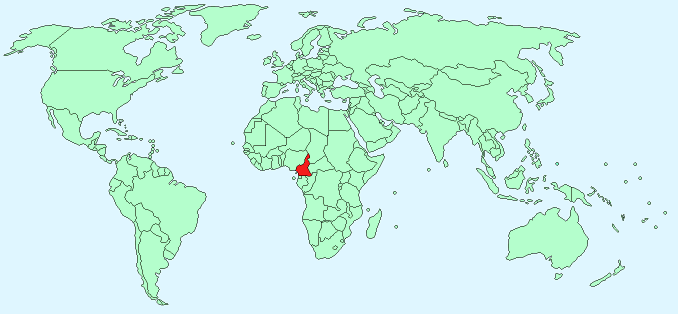
Map of the World


Cameroon on a Map of the World


Even as Union Nationalists make it a point not to comment on what others argue with a blinding emotion; one thing  about Cameroon can be observed with blinding clarity. The system in Cameroon is an oligarchic system, albeit its Beti domination. It is neither a Francophone nor Anglophone backed system; but rather a French backed system put in place to deny the overwhelming majority of the Cameroonian people their rights to a free, progressive, advanced,  democratic, liberal, fair, developed and  kind Cameroon that has a place among the community of civilized nations. The custodians( those who benefit from the system and preside over its survival)in Cameroon who in reality are puppets in the anarchronistic setup  are  a very small minority. In short, they  are criminals to the noble Cameroonian soul; and they are to be found amongst Anglophones , Francophones, Bamilekes, Dualas, Betis, Foulbes and in fact all the ethnic groups in Cameroon.

My problem with the Anglophiles who also happen to be Francophobes is that they try to excuse any wrong that an Anglophone Cameroonian does even if his/her action was self-centered, against the interest of the collective Cameroonian dream, is a custodian of the system and benefits from it. In fact, some of the Anglophiles exonerate these criminals to the noble Cameroonian soul for  the simple reason that they are Anglophones. Unfortunately, it becomes difficult, if not impossible to even imagine that  we can change Cameroon if we are incapable of rising up to the new demands of being self-critical and of rejecting those wrong elements in society who might even be our siblings, parents, relatives or kindred.


The noblest thing that ever happened to Cameroon was the realization of one of its dreams----reunification. And it is on reunification that a great state could have been built through a Cameroonian idea that cherishes the memory of close to a million Francophone Cameroonians who died in the struggle for reunification and independence against the French and their puppet Ahidjo, as well as the patriotic and union nationalist efforts of Southern Anglophone Cameroonians who voted for reunification and made the dream a reality.


My dear compatriots, some of the great powers are also guilty for our current plight. The United Nations on its part failed to prepare both territories (British and French Cameroons) for reunification and joint independence under the auspices of the UNO and under a mutual agreement (by French Cameroun and British Cameroons) on the nature of the new and independent Cameroon. Gaullist France defied that and granted French Cameroons independence; while Britain, USA and the UNO were quiet for the sake of “Fighting communism” (France had convinced them that the leading party for reunification-the historic UPC was communist.)

I repeat, the vast majority of Anglophones and the vast majority of Francophones are victims of this system; and collectively we are victims of a conspiracy that saw those powers desert the interest of Cameroonians. Britain and France treated Cameroon as a conquered enemy territory after World War One and never felt comfortable with Cameroonian reunification because it spelt of nostalgia for German Kamerun.

The majority francophone Cameroonian intelligentsia is aware of that, but I see a deliberate effort especially by our young Anglophone Cameroonian intelligentsia to turn a blind eye to that reality.

I felt proud as a  civic-nationalist, a Cameroonian union-nationalist when the majority of Francophones were in unison with their Anglophone brothers in supporting the SDF under Fru Ndi, hoping to at last realize the objectives of the Cameroonian dream and reunification, and honor the memories of those who died fighting for it and those who voted for it.

No people are collectively evil and no people are collectively good. What the world has seen are people with the evil disposition who hijack their nations and give it a bad name. That is the case with Cameroon and those people speak English and French. I see a blind attempt by our compatriots who disregard the noble aspects of the collective Cameroonian history to give a bad name to a whole section of our population. Yesterday, it was more of anti-Anglophone utterances by minority Francophones of the system, and today it is anti-Francophone by minority radicals who are for the a Free Southern Cameroons , blind radicals who dishonor the majority of Francophones who want change and are messing up the collective efforts of Cameroonians ( Francophones and Anglophones in alliance) to destroy the anachronistic French imposed system, bury it once and for all and realize the dreams of our forefathers for a new Cameroon that would take us to the future.

Lots of myths have been built around this issue and there is as much lies by the custodians of the system and those who reject the Cameroonian dream. I won’t get into that. Our only bargain with our future rests with us coming to terms with our true history and our collective dreams. That means working together to get rid of this system. I feel the pains because Anglophiles played the biggest role in making the SDF the lame duck that it is today. In fact, the biggest betrayal to SDF’s role as the force to realize the Cameroonian dream and the objectives of reunification came from self-centered Anglophiles who deliberately or foolishly caused disarray within the SDF.

This website below shows you countries in the world. Countries that are worst off are not worst off because they were former British, French, Portuguese, Spanish or Dutch colonies. They are worst off because they were hijacked by people with the evil disposition. Take a look:
http://www.nationmaster.com/graph-T/eco_pop_bel_pov_lin

Sunday, November 28, 2010

WHAT IS NOT WRONG WITH CAMEROON

Map of the World


Cameroon on a Map of the World


I have observed compatriots with thought formulations that make them impeccable union nationalist who reject the evil system oppressing us by striving for the future New Cameroon that would be an embodiment of liberty, democracy, freedom, progress, unity, peace and advancement. Yet, some of these compatriots sometimes sound like advocates of the system/Biya regime when it comes to the defense of Cameroon's unity.  While trying to defend the unity of Cameroon, it is easy to fall into the trap where one finds himself unconsciously propping up the Biya regime and system. Recently an exponent of change fell into that trap of appearing to exonerate the system and its regimes by minimizing the marginalization of the people in the different regions of Cameroon. The system bears far more of the responsibility for the people's underdevelopment, and not the other way around.

That some people survive better than others while under oppression does not mean that the different peoples (ethnic groups, nationalities, linguistic entities and regions) were not oppressed and that the system should not be faulted for being anti-people. Every people deserve an entitlement to the resources around them, as is the norm in any civilized nation. The fact that the most oppressed people in the history of humanity (the Jews) are considered by many to be the wealthiest does not mean that it is the fault of other oppressed people who failed to be self-sufficient, or that the underdevelopment of nations and people in Africa and elsewhere in the world is not the open or tacit, full or partial responsibility of foreign powers (directly or indirectly). Some people thrive under adversity while others are retarded or held back  by it. But that does not mean that those who thrived couldn’t have done even better if the country had been open, free, just, democratic and non-discriminatory.


On the other hand, I fault kwalar N's article for its intellectual dishonesty. He ended up doing more of a disservice to the people he appears to be siding with. I suggest he does more research to have a better understanding of this nation's history and people.

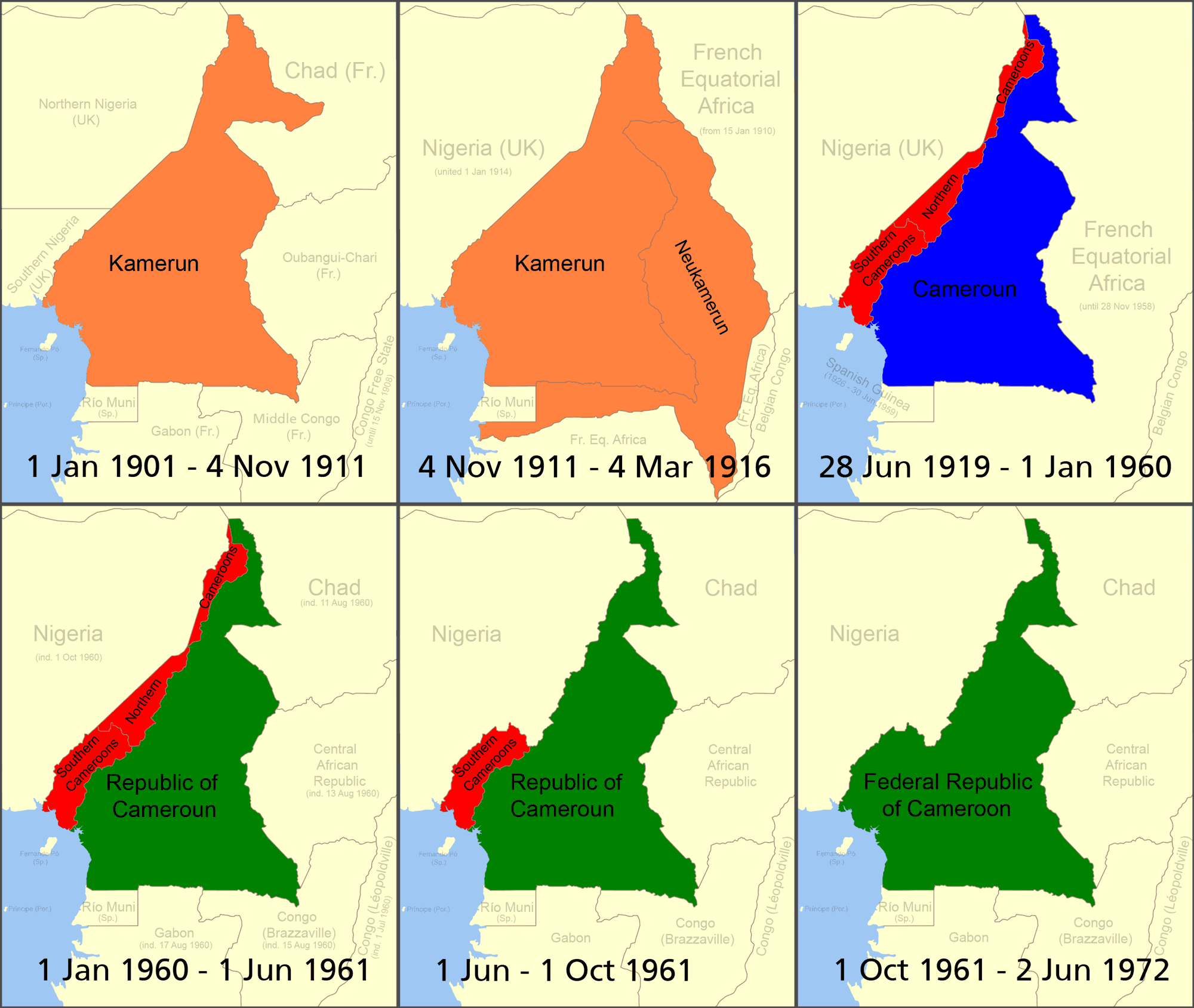
A little research would have taught him that Buea was the capital of this geo-political entity (at the time German Kamerun) before the capitalwas ultimately moved to Douala following the eruption of the Mt Fako (Mt Buea or Mt Cameroon). He would not have missed the fact that in 1910, the first liberation movement in Black Africa was formed in Cameroon under the leadership of Mebenga Mebono (Martin Paul Samba), a multi-ethnic movement  that left an imprint in the four southernmost provinces. He would have known that Martin Paul Samba, the Duala king Rudolf Manga Bell and a host of other prominent Kamerunians were hanged by the Germans in 1914 for conspiring with the British, French and Belgians to liberate German Kamerun. That the victorious Allied powers reneged and occupied German Kamerun instead, partitioned it further and treated it as conquered German territory should be eye-openers to Anglophiles and Francophiles. Kwalar would have known that the pro-German traditional rulers and their people suffered massively after and that the British and French relied on the former anti-German rulers and peoples to consolidate their grip on the partitioned former German Kamerun.

The agendas of OK (One Cameroon) and KNDP (Kamerun National Democratic Party) had strong UPC support. They were the force behind the victory in the plebiscite. Those who voted in British Southern Cameroons were legal residents (long time and born, so there was no transfer of UPC people to vote in the plebiscite. Meanwhile in British Northern Cameroons, the registered voters increased by 2.6 times (260%) within a year and a half. (Figure that out). A case in point is the fact that my father, their generation and the generation before them in the family who moved to the "Coast" during the era of German kamerun to work, trade and seek for a better life, like many other ethnic groups in Cameroon; supported reunification. Look at the historical annals of Saint Joseph College Sassed, the sole at the time and the school that churned out the vast majority of English speaking administrators for the 1950s, 1960s and 1970s, the backbone of an era of administration many of us are proud of. As an entity, a highly disproportionate number were from across the Mungo. If we are proud of that era, then we should be proud of them too for their honesty, patriotism, integrity and ideas as committed nation-builders of the post-independence Cameroon.

In Cameroon, the problem is not between Anglophones and Francophones. It is not even tribal or ethnic. It is about an oligarchic system that has no loyalty to the people; it is about a system steered today by the Biya regime, one that cannot muster a majority support in any of the ethnic groups and linguistic entities in Cameroon. The truth is that yesterday it was Fulani-dominated under Ahidjo. Today, it is Beti-dominated under Biya. Moreover, individuals from all corners and from all the ethnic groups of Cameroon are involved in the mafia-setup (our relatives, friends and tribesmen).

In the SDF dominated Limbe in the 1990s, I was privy to be working with what many considered to be the nerve of the party's intelligence gathering, and suffice to know that SONARA was a black hole that no patriotic Cameroonian could tolerate (Souleyman, a Fulani etc opposed the pillage by joining the SDF and lost his job, while others stuck with the CPDM and got into SONARA---Francophones and Anglophones alike). Our known petroleum reserves were expected to be depleted in 2008 and production started falling in 1989. Only recent economically viable discoveries (offshore mostly) will allow the reserves to run until 2013. With oil constituting less than 30%(from 80% in the 1980s) of government revenues today and with a decline in economic growth rate, little foreign investments and with Cameroonian businessmen investing abroad, time is on the side of the exponents of change. Makeshift reform moves by the regime in power that are nothing else but whitewash are an attempt to save itself from bankruptcy. It has been parasitic on Cameroonians, forgetting that as the nation languishes toward its  death, the evil system too would die.

At a whim, heads of nations have changed the names of their countries, cities, constitutions and history, but that does not change geo-political, social and economic realities. The fabrics of the nation (the people) stood the same. That is the situation in Cameroon. And the New Cameroon will be born from the great Cameroonian people and not from the names and slogans that the evil system is using to coat the Cameroonian reality. The system is living an illusion, but it would be foolhardy for disadvantaged Cameroonians to live an illusion as well, an illusion  that only gives credit to the regime in power and the anachronistic French-imposed system that has  been haunting Cameroonians  for six decades.

Monday, November 15, 2010

EXPONENTS OF CHANGE AS TEMPORARY INSTRUMENTS IN THE HANDS OF PROVIDENCE:


We are all temporary instruments in the hands of providence. An exponent of change committed to taking his people to a better future should expect his legacy to be the positive results of his engagements that might not even be realized during his life time. So it is irrelevant whether his/her name is mentioned or not by the people whose, economic, social, spiritual, or physical welfare the exponent of change is out to enhance.

The questions likely to be asked about such an exponent of change are:

Why is he doing it?
What is his purpose?
What is his conviction?
What values does he believe in?
Is he involved out of a blinding emotion,  for self interest or for an ideal above himself  that seeks to alleviate  the misery of the majority of  Cameroonians?

If the answers are in the negative, then we should be curious and try to go deeper. Because it is the responsibility of a believer in a cause to make sure that it does not get betrayed or tainted by self-seeking advocates, especially if the true believer or advocate is not less of a supporter than any of those brandishing it for their own ends.

It is easy to understand the pains from the mess that the political leaders have caused during mankind’s short history.  That’s why I think it is advisable that when we write, we try to confront ourselves and the reality in order to: make better judgments, learn lessons and never repeat the wrong actions of those we believe or believed in before. This is especially so in a cause that is at a complicated junction; because as it is often the case, many of its militants, members, supporters and sympathizers tend to have difficulties identifying the true the enemies and might even make mistakes in engaging their true friends. And unless those identifications are made based on the virtues of a right cause; exponents of change risk being trapped forever.

Posted by: Janvier Tchouteu | Wednesday, 23 February 2005


Janvier Tchouteu, author of “FALLEN HEROES: African Leaders Whose Assassinations Disarrayed the Continent and Benefitted Foreign Interests”

https://amazon.com/dp/1980996695/ref=cm_sw_r_tw_dp_JX6Q26H573RSKG7HT9V6


Janvier Tchouteu is the author of " The Mistakes To Be Avoided in Building The New Cameroon"