Tuesday, November 21, 2017

World's Longest Serving Heads of State that are Non-Royals


Rank
Name
Country
Office
Tenure began
Length of tenure
1.
Prime Minister, then President[1]
30 June 1975
42 years, 144 days
2.
President[2]
3 August 1979
38 years, 110 days
3.
 Iran
President, then Supreme Leader[3]
13 October 1981
36 years, 39 days
4.
Prime Minister, then First Secretary,
then President[4]
22 March 1984
33 years, 244 days
5.
President[5]
8 February 1979 – 31 August 1992 (1st time)
25 October 1997 – present (2nd time)
33 years, 232 days
6.
Prime Minister[6]
14 January 1985
32 years, 311 days
7.
President
26 January 1986
31 years, 299 days
8.
President[7]
30 June 1989
28 years, 144 days
9.
 Chad
President[8]
2 December 1990
26 years, 354 days
10.
President[9]
27 April 1991
26 years, 208 days
11.
Acting Head of State,
then President[10]
19 November 1992
25 years, 2 days
12.
Vice-President, then President[11]
19 July 1994
23 years, 125 days
13.
President
20 July 1994
23 years, 124 days
14.
Prime Minister[12]
20 July 1996 – 4 August 2003 (1st time)
6 August 2003 – present (2nd time)
21 years, 122 days
15.
Acting Head of State,
then President[13]
4 March 1981 – 25 April 1990 (1st time)
10 January 2007 – present (2nd time)
20 years, 2 days
16.
President of the Presidium of the
Supreme People's Assembly[14]
5 September 1998
19 years, 77 days
17.
Prime Minister
23 November 1998
18 years, 363 days
18.
President
27 April 1999
18 years, 208 days
19.
President
8 May 1999
18 years, 197 days
20.
Prime Minister, then President[15]
9 August 1999 – 7 May 2000 (1st term as Prime Minister)
8 May 2000 – 7 May 2008 (1st term as President)
8 May 2008 – 7 May 2012 (2nd term as Prime Minister)
7 May 2012 – present (2nd term as President)
18 years, 104 days
21.
Prime Minister
22 June 1995 – 9 July 2008 (1st time)
20 February 2013 – present (2nd time)
17 years, 291 days
22.
Prime Minister, then President[16]
21 March 1990 – 28 August 2002 (1st time)
4 December 2012 – present (2nd time)
17 years, 147 days
23.
President
17 July 2000
17 years, 127 days
24.
President
17 January 2001
16 years, 308 days
25.
Prime Minister
29 March 2001
16 years, 237 days
26.
Prime Minister
26 July 1996 – 29 September 2003 (1st time)
23 October 2008 – present (2nd time)
16 years, 93 days
27.
De Facto Head of State,
then President[17]
25 February 1980 – 25 January 1988 (1st time)
12 August 2010 – present (2nd time)
15 years, 70 days
28.
Prime Minister, then President[18]
14 March 2003
14 years, 252 days
29.
President[19]
22 May 2003
14 years, 183 days
30.
Prime Minister, then President[20]
4 August 2003
14 years, 109 days
31.
Prime Minister
29 October 2003
14 years, 23 days
32.
Prime Minister, then President[21]
12 December 2003
13 years, 344 days
33.
Prime Minister
23 June 1996 – 15 July 2001 (1st time)
6 January 2009 – present (2nd time)
13 years, 341 days
34.
Prime Minister
8 January 2004
13 years, 317 days
35.
Prime Minister, then President[22]
19 March 2003 – 6 September 2003 (1st time)
15 January 2005 – present (2nd time)
13 years, 116 days
36.
Prime Minister
12 August 2004
13 years, 101 days
37.
President
1 January 2001 – 15 January 2009 (1st time)
17 January 2013 – present (2nd time)
12 years, 322 days
38.
 Togo
President[23]
5 February 2005 – 25 February 2005 (1st time)
4 May 2005 – present (2nd time)
12 years, 221 days
39.
President[24]
30 July 2005
12 years, 114 days
40.
President
26 August 2005
12 years, 87 days
41.
Federal Chancellor
22 November 2005
11 years, 364 days
42.
President
16 January 2006
11 years, 309 days
43.
President
22 January 2006
11 years, 303 days
44.
Prime Minister
18 June 1996 – 6 July 1999 (1st time)
31 March 2009 – present (2nd time)
11 years, 252 days
45.
Prime Minister
6 July 1998 – 27 May 2002 (1st time)
29 May 2010 – present (2nd time)
11 years, 136 days
46.
 Cuba
First Secretary, President
and Prime Minister[25]
31 July 2006
11 years, 113 days
47.
Federal Council Member,
currently President[26]
1 August 2006
11 years, 112 days
48.
 Fiji
Acting Head of State,
then Prime Minister[27]
29 May 2000 – 13 July 2000 (1st time)
5 December 2006 – present (2nd time)
11 years, 31 days
49.
President[28]
21 December 2006
10 years, 335 days
50.
Prime Minister, then President[29]
25 March 2007
10 years, 241 days
51.
Prime Minister
31 December 1995 – 15 December 1998 (1st time)
5 May 2003 – 24 May 2006 (2nd time)
23 June 2008 – 3 September 2012 (3rd time)
16 August 2017 – present (4th time)
10 years, 172 days
52.
 Mali
Prime Minister, then President[30]
4 February 1994 – 15 February 2000 (1st time)
4 September 2013 – present (2nd time)
10 years, 89 days
53.
President
7 September 2007
10 years, 75 days
54.
President
17 September 2007
10 years, 65 days
55.
Prime Minister, then President[32]
7 November 1990 – 9 December 1993 (1st time)
4 December 2010 – present (2nd time)
10 years, 19 days


Thursday, October 26, 2017

The Assassination of John F. Kennedy, The 35th President of the United States of America ( Excerpt of Famous Political Assassinations in the Last Two Centuries: How They Affected the World)


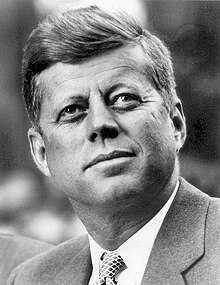
John F. Kennedy, White House photo portrait, looking up.jpg 


John F. Kennedy


Born on May 29, 1917, John F. Kennedy was the 35th president of the United States from 1961–63. His assassination on November 22, 1963, as he was riding in a motorcade in Dallas, made him the youngest US president to die in office. His presidency was marked by the highest tension America ever had with the states of the communist world. These included the Cuban Missile Crisis, the Bay of Pigs Invasion, the construction of the Berlin wall and his Berlin speech, and a multifold increase in American military involvement in Vietnam. Even so, he managed to secure memorable achievements such as the Nuclear Test-Ban Treaty, the Alliance for Progress, the establishment of the American Peace Corps, developments in the Space Race, the Trade Expansion Act to lower tariffs, and desegregation, which he accomplished working with the Civil Rights Movement under the leadership of Martin Luther King Jr.


John F. Kennedy made history in the USA by becoming the youngest man and the first Roman Catholic that the country ever elected to the presidency of the United States. He began his memorable presidency with his equally memorable inaugural address, where he called upon Americans “to bear the burden of a long twilight struggle…against the common enemies of man: tyranny, poverty, disease, and war itself.”


However, when he declared that:
“In the long history of the world, only a few generations have been granted the role of defending freedom in its hour of maximum danger. I do not shrink from this responsibility—I welcome it…The energy, the faith, the devotion which we bring to this endeavor will light our country and all who serve it—and the glow from that fire can truly light the world. And so, my fellow Americans: ask not what your country can do for you—ask what you can do for your country.”

It was a highlight that his presidency would be different from those of his predecessors.


However, his expected two-tern presidency was cut short not up to three years into his stay in the Oval Office by the bullets of his assassin(s). Lee Harvey Oswald, a self-described communist, was accused of killing President John F. Kennedy in Dallas, Texas with three shots at 12:30 pm on November 22, 1963, from a window on the sixth floor of a depository building, using a mail-order rifle, and was formally arraigned for the “Murder of President Kennedy” an hour later.


Jack Ruby, a distraught Dallas nightclub owner, shot Oswald dead on the morning of November 24, while he was being transferred from a jail cell to an interrogation office. The United States judiciary system tried and found him guilty of murder on March 14, 1964, and as punishment sentenced him to death. A Texas appeals court reversed the conviction in October 1966, but Ruby died, apparently from a blood clot complicated by cancer on January 3, 1967, before a new trial could be held.


Kennedy’s Vice President Lyndon B. Johnson succeeded him. The official conclusion by the FBI and the Warren Commission that Oswald was the lone assassin, was sharply criticized. The United States House Select Committee on Assassinations (HSCA) agreed that Oswald fired the shots that killed the President John F. Kennedy, but the committee also concluded that Kennedy was likely assassinated as the result of a conspiracy. Most Americans who are cognizant of the John F. Kennedy assassination believe Oswald was not the only shooter, and that there was a conspiracy.


Kennedy’s engagement with the Soviet Union following the Cuban Missile Crisis led to an effective management of the Cold War, and set the grounds for other US presidents to pursue policies that culminated with the ending on the cold war between the USA and the USSR (Union of Soviet Socialist Republics, otherwise called the Soviet Union or Soviet Russia) in the late 1980s.
Many Americans compare the shocking and memorable nature of the announcement of John F. Kennedy’s assassination with the tidings of the Japanese attack on Pearl Harbor on December 7, 1941, before it and the memorable September 11, 2001 terrorist attacks on the Twin Towers and the Pentagon after it. An estimated 16 million people visited his grave over a period of three years from 1964-1966.


There are several songs out there such as Dion Francis DiMucci’s "Abraham, Martin and John," written by Dick Holler that honor the 35th president. Memorials, busts and statues; Plazas and squares; Airports and space center; Roads and bridges; Buildings; School etcetera are out there in the USA and other parts of the world in honor of John F. Kennedy. In fact, the U.S. Navy aircraft carrier USS John F. Kennedy (CV-67) was named after him and served until March 23, 2007. A second USS John F. Kennedy (CVN-79) aircraft carrier that is due to be commissioned in 2018 attests to the mark he left in the annals of US. history. These add to the John F. Kennedy International Airport, in New York City, which is America’s busiest international gateway; the John F. Kennedy Space Center that manages and operates America's astronaut launch facilities in Merritt Island, Florida; as well as a Kennedy fifty-cent coin that was first minted in 1964.


Famous Political Assassinations in the Last Two Centuries: (An excerpt of "A DEATH IN GENEVA THAT PUT A NATION IN A COMA AND TRAUMATIZED AFRICA: The Assassination of Félix-Roland Moumié and Cameroon’s Unfinished Liberation")


Félix Moumié


 Image result for upc leaders moumie photo
UPC Leaders (L. to R.) front row: Castor Osendé Afana, Abel Kingué, Ruben Um Nyobé, Félix Moumié, and Ernest Ouandié

Image result for cameroon map of the world

Cameroon on a map of the world


Born in 1926, Félix-Roland Moumié, was an anti-colonialist Cameroonian leader and Pan-Africanist. His assassination in Geneva on  November 03, 1960 by William Bechtel of the SDECE (the French Secret Service) with thallium is regarded as the most brazen crime committed by the French secret service abroad, and perhaps the biggest single blow suffered by Cameroonian civic-nationalists fighting for the liberation of the land from French neocolonial control.

Dr. Felix-Roland Moumié was the head of the UPC (Union des Populations du Cameroun, also called Union du Peuple Camerounais — "Union of the Populations of Cameroon") from 1958-1960. The UPC was the first historic political party to emerge from the territories of the former German colony of Kamerun. Founded in 1948, the UPC operated in both French Cameroun and British Cameroons --- Trust Territories that emerged from the 1884-1916 former German Kamerun following its partition between Britain and France as agreed in the 28 June 1919 Treaty of Versailles, the most important of the peace treaties that brought World War I to a close by formalizing the end of the state of war between Germany and the Allied Powers. The party’s primary objective was the reunification and independence of British Cameroons and French Cameroun, Trust Territories that were the successors of the League of Nations mandates, and that came into being when the League of Nations ceased to exist in 1946.

The French Trusteeship administration banned the UPC in 1955, accusing it of fomenting civil unrest, thereby forcing the party into exile in the summer of 1955. However, The UPC resurfaced in 1956 and challenged France via the international media. The British colonial authorities also banned the UPC in British Cameroons in 1958, thereby forcing most of its leadership that escaped French Cameroun and sought sanctuary in British Cameroons to flee to Egypt, Ghana, China, and other countries that were supportive of the Cameroonian cause for its reunification and independence. Ruben Um Nyobé, the party’s leader  and Secretary General; Ernest Ouandié and Abel Kingué, the party’s two vice presidents; and Felix Moumié pledged to carry on with the struggle for the reunification and independence of French Cameroun and British Cameroons, despite France’s resolve to divide and rule the peoples of the former German Kamerun. After all, the UPC commanded the support of most the people of French Cameroun and its offshoots and sister parties in British Cameroons commanded the support of the electorate there. In fact, more than 80% of educated Cameroonians supported the party and its cause for the reunification and independence of the lands of the former German Kamerun.

However, the party received its first major trauma when three years after the ban, at a time that some pundits were beginning to think that France would allow the party to start operating again as a legal political entity, the security forces of the French Trusteeship administration assassinated the UPC’s first leader Ruben Um Nyobé on September 13, 1958, near his home village.

So, when Dr. Felix-Roland Moumié succeeded Ruben Um Nyobé, he was forced to operate from exile, even though the UPC was the only party in French Cameroun that enjoyed the overwhelming support of French Camerounians and that shared a similar program with sister parties or offshoots in British Cameroons. Undeterred, he challenged France’s crackdown on the UPC in a more determined manner, so that UPC partisans were in control of much the countryside of the southern half of French Cameroun before France handed French Cameroun’s political control or sovereignty to its puppet Ahmadou Ahidjo, declared the land independent on January 01, 1960, and at the same time concluded a series of socio-economic and political agreements with the infant state that virtually made it a backyard of France.

Considered by some as the “African Che Guevara in the making”, Félix Moumié was an astute leader as well as a great organizer who before his death had met that summer of 1960 with Ernesto Che Guevara, the Argentine international revolutionary and second-in-command in the new anti-American and anti-Western government of Fidel Castro’s Cuba. In addition to that development, the Cameroonian partisan leader had successfully developed a special rapport with the bellicose Egyptian president Gamal Abdel Nasser, the Pan-Africanist president of Ghana Kwame Nkrumah, and the stubborn nationalist Guinean head of state Sékou Touré who defied France and whisked Guinea out of the neocolonial clutches of  its former colonial master.

Many pundits think France and its Cold-War allies feared the new UPC leader’s drive in forging strong relationships with  some of the other leaders in the communist bloc who hoped to see Africa emerge one day as an economically united and politically integrated continent. The fact that those leaders promised to increase their support to Moumié’s partisan group made France and Ahmadou Ahidjo extremely nervous.

 The exiled second leader of the Cameroonian civic-nationalist movement was on a mission to Europe in October 1960, when William Bechtel invited him to dinner in a hotel in Geneva, Switzerland, posing as a journalist.  In fact, he was a member of the "Main Rouge," an offshoot of a special unit in the French secret service charged with eliminating anti-French and pro-independence African nationalists and their supporters in Europe.

Distracted by a summon to the phone by a restaurant staff, Moumié left his unfinished drink that Bechtel contaminated by pouring a lethal dose of thallium into it.  But Moumié did not drink it upon his return. So, Bechtel created another distraction, during which he poured another dose of thallium into Moumié's wine. Moumié ended up gulping down both drinks and died in a Geneva hospital on November 3, 1960, days before his return to Guinea, and much earlier than his killers had planned. The fact that the Cameroonian liberation leader took an overdose of the poison thwarted the plot France had hatched to blame Felix Moumié’s death on Guinean president Sekou Touré, who had been acting as the UPC leader’s host during his exile in the Guinean capital of Conakry.


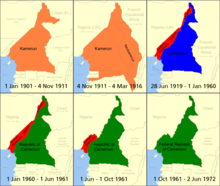
Cameroon over time
  1. German Kamerun (1884-1911)
  2. German Kamerun (1911-1916)
  3. British Cameroons & French Cameroun: 1916-1960
  4.  British Cameroons & La Republique du Cameroun (1960-1961)
  5. British Southern Cameroons & La Republique du Cameroun (1960-1961)
  6. Reunited/Independent Cameroon today.

Félix Moumié’s assassination would be followed less than a year after by the horrendous assassination of Patrice Lumumba of Congo. The deaths of these two African civic-nationalists with a Pan-Africanist vision would be followed by a bloody repression of the popular resistance to the neo-colonial regimes in their respective countries....


Janvier Tchouteu is the author of “FALLEN HEROES: African Leaders Whose Assassinations Disarrayed the Continent and Benefitted Foreign Interests”

https://amazon.com/dp/1980996695/ref=cm_sw_r_tw_dp_JX6Q26H573RSKG7HT9V6


Disciples of Fortune

Disciples of Fortune

by Janvier Chouteu-Chando