Wednesday, October 13, 2010

ANTI-BAMILEKE SENTIMENTS AND CAMEROONIAN UNION NATIONLAISM


Hate is a negative and blinding emotion. And there is a name for a disease that affects people who hate or are fearful of those people or things they shouldn't be hateful or afraid of. It is called Persecutionmania.

I indicated  decades ago after a careful observation, that Cameroonians may never be able to muster the full strength to get rid of the French-imposed system unless they come to terms with their Anglophone and Bamileke problems. The majority of Cameroonians (Francophone and Anglophones, with the exception of the minority system in power) came to terms with the Anglophone problem and voted in their majority for Fru Ndi, an Anglophone, just like the majority of Americans overcame centuries-and-decades-old biases over blacks by voting Obama into power.

But it saddens me when individuals who come from the Anglophone group who have been marginalized by the system, blatantly exhibit those same biases and preconceptions against an ethnic group―the Bamilekes. Using fear or hatred of the Bamilekes especially, was one of the major rallying cries that the French, Ahidjo and the system at large used to maintain their stay in power. We thought that preconception of the Bamilekes as a national enemy within had been broken in 1990. It appears that has not been the case.

We can never beat the system unless we overcome the Bami, Anglo  and other group brainwashing that was made the mindset by the system in power. Anybody who keeps rattling about it makes himself or herself an enemy of the people and an obstacle to change. You automatically put yourself as a dividing force in the struggle.

The historical forces are close to the configuration that will sweep the system out of power. We can not afford to have divided ranks at that historic moment. Our future should belong with a democratic, united, economically integrated Africa; our future should be a "New Cameroon" that  guarantees civil rights, liberties  and benefits for its population. Cameroon would be the epitome of that new Africa as an embodiment of the positive results that can come out of a diverse people with a tragic past; who overcame their traumas and differences, harnessed their hopes and dreams and built on their mutual compatibilities to realize a successful nation state.

Our generation has the colossal task of realizing  Cecil Rhode's vision of a railway line from Cape Town to Cairo, and to draw from Africa's contemporary unifying heroes in the unavoidable path that will culminate in  Africa’s economic union and political integration. To achieve those goals, we have to look beyond our noses.


A true Cameroonian nationalist of the union bent (Union nationalist) does not dwell on ethnicity, tribe, linguistic affiliation, or religion etc. The union nationalists with the revolutionary vision won't even subject themselves to the mercy or handout of the system, its backers or those who out of personal interest are dealing or collaborating with the system.

I don’t think I am alone in looking forward to a future where an African would say Ubi bebe, ibi patria vera!  (Where it goes well with me, there is my true fatherland.), or where I would say I am a Bakwerian born Cameroonian or a South West born  Bamileke; without receiving snorting replies to my pronouncements. Or even be called Mola, just  like some of my father’s  friends always called him.


Let a thousand ideas  flourish on how the future, accepting and  enriching New Cameroon  should look like.  Cameroon has a historic role to play in realizing the New Africa. The carelessly drawn triangle many of us fondly refer to as Pays embodies Africa’s spirit.

No people are collectively evil. Only individuals are evil. And the evil system in place has elements from all the religious, ethnic and social groupings in Cameroon. The Germans were never collectively condemned as bloodthirsty despite the atrocities of Nazism. The Hutus  were not  ostracized over the Rwandan genocide. All Rwandans today are viewed as potential builders of the  New Rwanda, a country that stands in Africa as one of the few in the continent that has a sense of direction.

So, advocates of the New Cameroon, Union Nationalists  of all shades of ideas and beliefs; Let’s join hands  in rejecting the system, confronting it and  working for the foundation and development of the NEW CAMEROON that rejects the stereotypes  hatched by Jacques Foccart and the anti-Cameroonian system put in place by France, a system that is stifling our development and dividing our ranks.


Monday, October 4, 2010

DESCRIPTION OF CAMEROON (From the political thriller "Triple Agent, Double Cross")


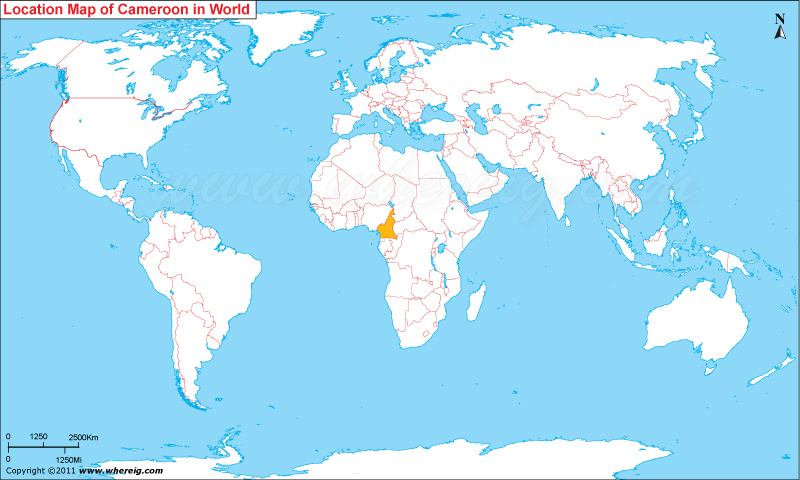
Cameroon on a Map of the World


 Part I ( from the book "Triple Agent, Double Cross)


The African Pearl


If you board a plane or ship plying any of the international routes and ask to be taken to the heart of Africa, do not be surprised to find yourself disembarking in Cameroon. It is a beautiful country per se,  situated opposite the middle portion of Brazil, on the eastern side of the Atlantic Ocean. Bordered by six countries of which Nigeria is the most prominent neighbor, Cameroon appears on maps like a heavily pregnant mother carrying a baby on her back. .
     This peculiar geopolitical entity was created by accident and apportioned to Germany during the 1884 Berlin conference that carved up Africa. Berlin treated German Kamerun as its treasured colony for thirty-two years until Great Britain and France captured the land during the First World War, partitioned it into British Cameroons and French Cameroun, and then went on to lord it over the people for four decades. However, they too were challenged by Cameroonian nationalists who campaigned for the divided territory’s reunification and self-rule. Today, English and French are the country’s official languages, mirroring the dominance of the two Indo-European languages in Africa.
      They say the gods have a design even in the most outrageous acts of mortals. If that is the case, then it also applies to Cameroon. The country has defied so many odds in its history that the people now pride themselves with the saying that “Impossible isn’t a Cameroonian word.”
      Renowned voices tend to call Cameroon “Africa in miniature”, not only because of its fanciful shape and turbulent history, but also because of the physical and human aspects of its geography. It is the point in Africa where the East meets the West and where the North meets the South. It is a country that features plains and mountains, plateaus and valleys, rivers and seas, lakes and waterfalls and other landmarks that mirror the rest of Africa. The south is dominated by equatorial and tropical rainforests, the north is covered by Sahelian vegetation, and the middle portion of the country is graced with high savannah of mixed grassland and forest. In fact, all the different flora and fauna in Africa can be found in this carelessly drawn triangle called Cameroon.
     The curious eye is apt to notice varying statures, facial types and shades of complexion as it travels throughout Cameroon—a legacy of the territory’s history as the crossroads of African migrations. Anthropological linguists hold that all of Africa’s four major language groups converge in Cameroon.
     The southern portion of the country is the base from where Bantu speakers spread to southern and eastern Africa. The furthest spread of Afro-Asiatic peoples is in the north of this territory, featuring groups like the Semitic-speaking Arabs, Berber-speaking Tuaregs, Chadic-speaking Hausas and Batas, and Fula or Fulfulde-speaking Fulanis or Peuls. Nilo-Saharan speakers dominate the north of the country in their furthest spread to the west of the continent. Also present in Cameroon are small ethnicities of the fourth major subgroup (Niger-Congo A) that occupy the southwestern border regions with Nigeria. Settled in the northwestern portion of the country that looks like the pregnant part of mother Cameroon is the fifth and unique indigenous group that you will find only in Cameroon. Called semi-Bantu, Graffi or southern Bantoid, this group has characteristics of all the four major language groups or sub-races in Africa. Legends and lore hold that semi-Bantus are originally of Afro-Asiatic and Nilo-Saharan descent and that they assimilated all the peoples they encountered in the course of their migration. The Bamileké people are the dominant ethnicity in this group.
      It is true that Cameroon’s human and physical wealth has been the source of its turbulent history, its pride and the ingredients that give its people a unique flavor. The flavor has produced colorful Cameroonian characters that the curious eye and mind is likely to enjoy by hating or loving them, pitying or angrily denouncing them. These characters provide insights into the human nature and the African continent that is haunted by leaders with the evil disposition.
     While other African peoples have picked up arms and warred among themselves to have their country split up, Cameroon is the only geo-political entity in the continent whose inhabitants went to war to reunite its people separated by the legacy of Anglo-French partition of the former German colony of Kamerun. It is the only country where those who fought for its reunification and independence are yet to assume political power, as they continue to languish from the defeat suffered in the hands of the French overlords and the puppets they installed in power. It is the land where you will find Africa’s biggest political deception and sleaziest mafia. It is the country in Africa with the lowest number of heads of state in its history, yet it is a country that is unlikely to engage in internecine war to get rid of the suffocating system. 
     In the middle of the twentieth century, a child was born in Cameroon who by the age of ten, proved he could become anything he wanted to be. This child prodigy happened to be the son of a soldier of the Free French Forces that fought its way across the African desert and liberated France from German occupation during the Second World War. The boy looked up to his revolutionary father as the greatest source of inspiration in his life. But how he ended up serving those who wrecked his world is the riddle the rest of the story is going to unravel...


Culled from Triple Agent, Double Cross


Part II: Afterthought on 07/04/2015: Cameroon as a Hijacked Nation


In power since 1982 is Africa's absentee dictator Paul Biya, who was made the successor of his predecessor Ahmadou Ahidjo by an order from former French President Francoise Mitterand; Ahidjo, who himself was brought to power by the French to usurp the aspirations of Cameroonians in their liberation struggle led by the UPC that the French banned in 1955, a party with more than 80% of the land's intellectuals and even more national support. France had made sure Ahidjo's power was secured by decimating its support base in a 12-year war against the party and by killing all the UPC leaders (Un Nyobe 1958, Felix Moumie in Geneva 1960, Ossende Ofana 1966, Ernest Ouandie 1971 etc.), leaving Cameroon a nation haunted by an "Unfinished Liberation Struggle". Today, Cameroonians are out not only to get rid of the Dictator Biya's autocracy, but also to get rid of the French-imposed system that its custodians want to continue with someone else after Paul Biya departs.


Part III: Cameroon under an oppressive system and  haunted by Terrorism

Compounded by the retrogressive system and the lunacy of the Biya regime is the specter of Boko Haram that started haunting northern Cameroon a few years ago, a distorted form of Islam espoused by a group that sees glory in the murder of the innocent (women, children and other civilians), a spillover from Nigeria's religious tension and an amalgamation of geopolitics as foreign interests extend the exploitation of resources in the Lake Chad basin. Only a Cameroon rid of the retrogressive French-imposed system and headed by those who put the interest of the land above their personal interests or the interests of foreign entities who have no genuine concern for the land, can the citizens of Cameroon be certain that the country and government would be able to handle the insecurity posed by anti-people and dehumanized groups like Boko-Haram. In fact, Boko-Haram in North Cameroon and the system/Biya regime are in symbiosis as they make each other relevant in a space where both are loathed by the vast majority of Cameroonians.


By Janvier Tchouteu, author of “Cameroon: France’s Dysfunctional Puppet System in Africa”  https://amazon.com/dp/B06ZZ5NZXL/ref=cm_sw_r_tw_dp_ZSJY62088EQE8AYPFM0X via @amazon


Cameroon: France’s Dysfunctional Puppet System in Africa

Cameroon: France’s Dysfunctional Puppet System in Africa

by Janvier Tchouteu, Janvier Chouteu-Chando, et al.


THE DAWN OF AN UNAVOIDABLE TASK:

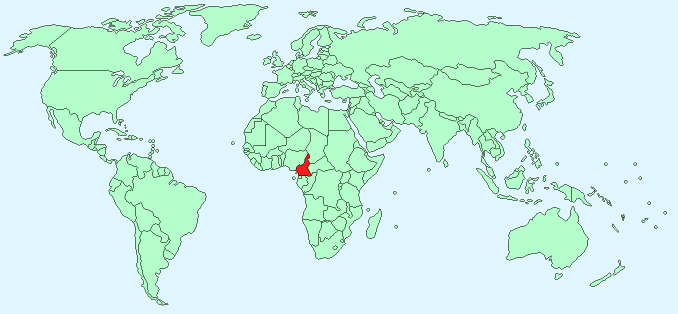
Map of the World


Cameroon on a Map of the World


When a government, regime or system loses the confidence of the people but  lacks the honor to bow out of the political scene even for a while, when  such an establishment discards all manifestations of honesty, respect of the  nation, accountability and patriotism and pursues a heartless, detached and  repressive path in order to maintain power that it cannot utilize for the  interest of the people; and more especially, when such a political clique  uses theft, fraud, terror, blackmail, fomentation of ethnic division and treason; then we all have to accept that the government, regime or system  has lost the human touch and is posing as a plague to the patriotic struggling masses. Such a rule is an affront to humanity. It has nothing progressive to offer.

The Biya regime, which is the custodian of the French-imposed system, is the worst affront to Cameroonians after more than four decades of bondage in a system Cameroonians never opted for and that is a follow up of more than a century of colonialism. Cameroonians paid a heavy price of about a million deaths to get rid of this system (the pre-1910 resistance, the unsuccessful Martin Paul Samba led liberation movement of 1910-1914, and the Ahidjo-French genocide against the struggling masses who supported the UPC in the 1956-1970 war of liberation against the French and puppet Ahidjo regime). Repression, suppression, despondence, brain drain, economic deprivation, underdevelopment and social degeneration are some of the heavy prices that
Cameroonians have been forced to pay for failing to liberate themselves. The French-imposed system has forced Cameroonians along a chaotic socio-economic and political path whose endemic corruption, nonchalance and unaccountability contradicts the inner values and dynamism of the Cameroonian people and poorly reflects the great potentials that our nation possesses. We have to get out of the years of incomprehension and self-deception by accepting that the absence of a program for the nation has left us decades behind the rest of the world, far below our expected level of development. Cameroon is failing to grow up because of the system in place.

That the machinery of the French-imposed system clogged years ago; that it is anachronistic and a hindrance to the nation’s progress and development; that the system is incapable of self-rejuvenation and authentic reform; that it has no alternative plan to prepare Cameroonians for the demands of the next century; that it is rotten to the core and lacks the basic sense of patriotism to prevent the complete decay of the nation along with it; and that it has shown to those who were predisposed to see and those who were not of its commitment to use fraud, theft, ethnic antagonism, terror, blackmail, sabotage, extortion and crimes against humanity draws open the most decisive stage in the third phase of the Cameroonian struggle.

Confronting us is the facade of a monstrous but rotten system that is posing as the obstacle to the ultimate revelation and realization of the great Cameroonian dream of freedom, liberty, unity, harmony, progress and integration with other progressive forces and nations of Africa and the world. This French-imposed system has kept us three decades behind our expected level of development. It would even take us ten years of a magical economic growth rate of 10% to enable us attain the 1984 standard of living.

The realization of such a fit is possible only through a fundamental overhaul of the system, build up of economic, political and social confidence, massive inflow of foreign capital and modern technology, all prerequisites for revival that can not be provided by the Biya regime which has caused a sixty percent drop in the people’s standard of living and the French-imposed system that is indirectly responsible.

To accept the continuation of the anachronistic system’s usurpation and the Biya regime’s retention of power is the acceptance of Cameroon’s suicide and a denial of a future for the second post independence generation of Cameroonians (our children). Such an option is unacceptable to the most victimized Cameroonians---The post independence generation. The weight of Cameroon’s liberation, the cure of its incomprehension, the formulation of its path to the future and the advancement of its citizens rest on the shoulders of this generation. It is a hard and merciless task, but the only salvation for Cameroon.

Yes, Cameroonians in their majority who constitute the struggling and patriotic masses have proven their maturity and manifested their love for a peaceful change by saying no to the system in the past five elections. Their pleas, implorations, protests and resistance against the fraud of the electoral system organized by a system that prevents the registration of seventy percent of the population and prevents half of the thirty percent of registered voters from casting their ballots have been met with state terrorism from the Biya regime.

It has been observed with clarity that the patriotic struggling masses are being denied the right to realize their dreams, which embodies the noble Cameroonian Dream of  Progress, economic development, social harmony, humanitarian socialism and advancement. Such a denial of their basic human rights is unacceptable after close to forty years of delay. We need a fundamental change that can enable us to catch up or even minimize the lost time in the race to progress. Any further retention of power by the usurper Biya regime and the anachronistic system it is upholding is acceptance of the transformation of our chronically sick nation into a terminal case. Faced by selfish resistance to the redemption of our potentially great nation, it has become our unavoidable task to get rid of the Biya regime and eradicate the system in order to prevent the demise of Cameroon. We have tried other options and failed. Nevertheless, we are still left with one path.

Now is the moment for Cameroonians to brandish the banner of our union nationalism and its extended fraternity of Pan-Africanism and with the loud cry of “Forward Match to the Future”, we should lead the struggling masses to realize their noble dreams, recover their stolen victories and reestablish their ties to the destiny of our nation. What we have in Cameroon are a multitude of political parties. We do not have democracy. Only a revolutionary vision can rebuild Cameroon and set it on the right path to the future. The union nationalists are the revolutionaries who honor the Cameroonian dream even in their different political parties, but who all share the unifying and patriotic vision for Cameroon. Now is the moment to rally behind the unifying banner of Cameroon’s union nationalism whose revolutionary cause calls for a total and fundamental change of the anachronistic French-imposed.


May 29, 1997                                                                              Janvier Tchouteu


THE WORLD'S FIRST INDUSTRIAL SPY

When Samuel Slater was born near Manchester in 1768, hardly anybody thought he would amount to anything. He took that astride and  began working in a mill at the age of fourteen. And he certainly was a hard worker, because he became a manager even before he turned twenty. Still, he did not delude himself that he could realize his dreams in class-ridden Britain where he was regarded as a commoner.

So, after six years of studying every aspect of cotton manufacture and memorizing details of the complicated spinning looms invented by Richard Arkwright in 1768, Slater decided to stake his future in the United States of America, where a man could pursue his dreams irrespective of his status. However, the authorities in Britain strictly prohibited the export of textile-related technology and the know-how. But Slater managed to circumvent them by slipping past British agents disguised as a farmer and sailing to America, where he decided to pursue his American Dream.

With barely enough to survive in America, Slater arrived in Rhode Island, and put his plans in motion. He created America's first advanced mill and established tenant farms and towns around his textile mills, such as Slatersville. "Slater system" mill villages soon spread across the state and into Connecticut. He died in 1835 as a multi-millionaire and the title of Father of the American Industrial Revolution.