An Excerpt from Flash of the Sun
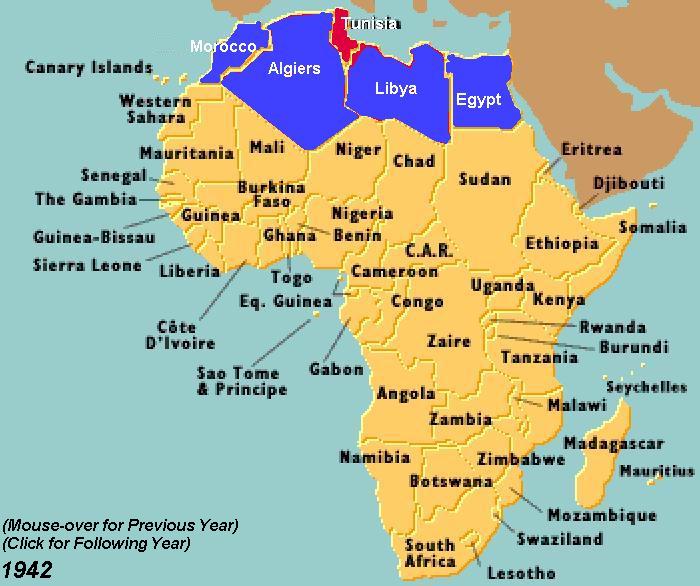

...Joseph, Marcel, the rest of the Free French Forces and the Allies knew that the Axis powers needed to capture Tobruk to push into Egypt and control the Suez Canal. With regrouping Axis troops threatening Allied forces thirty miles east of Tobruk along a line that ran thirty miles south from Gazala at the coast, the entrenched and equally regrouping Allied forces went about their business of fortifying their defenses in preparation for the anticipated showdown sometime in May. However, while the northern defense around Tobruk was well-prepared and well-constructed, making it almost impregnable to any advancing army, the southern part was not as tightly fortified, leaving it vulnerable to penetration from a heavy flanking force. General Claude Auchinleck, the Commander in Chief of British Middle East Command and the overall commander of Allied forces in North Africa, expected the Axis to attack the northern part of the defense. So, he placed the better-armed and better-trained 8th Army there. Here he was outsmarted by Rommel, who attacked Gazala on May 26, giving the impression that the north was the main point of attack. At the same time, he sent the cream of his forces to the south, thereby outflanking the 8th Army in the process. But Rommel’s plan to cut the Allied supply lines by gaining rear access to their southern defenses did not go as smoothly as planned because of Bir Hakeim.
When General Claude
Auchinleck asked General Marie Pierre Koenig, commander of the 1st Free French
Division, to relieve the British forces manning the fort in the oasis of Bir
Hakeim, he never expected much from this diverse military unit made up mostly
of French Camerounians, Chadians, and
other Equatorial Africans. However, quick Axis successes against British troops
south of the oasis made Bir Hakeim the next place to be overrun in Rommel’s
southern plunge that was intended to deceive the opposing Allied forces.
Alerted to the rapidly advancing Axis forces, General Koenig readied his men in
defensive positions early the next morning. So, when the enemy attacked, the
fighters of the 1st Free French Division were prepared to do battle with the
overconfident Axis forces.
He remembered the first
day of fighting at Bir Hakeim as the proudest day of his life as a soldier
because they fought in a manner and with a spirit that was beyond their
expectations, forcing the enemy to retreat in earnest. The 1st Free
French Division did not lose a single soldier that day, but they deprived the
Axis forces of four dozen tanks and captured ninety-one prisoners. It turned
out that even though Bir Hakeim held out, the Allied positions just north of it
fared much worse as those defending it got wiped out, thereby leaving them at
Bir Hakeim isolated and under siege.
The difficult development
forced the defenders of Bir Hakeim to ration food and water, fortify their
ranks and develop a suicidal mentality. They barely covered their eyes to get
some rest thereafter. All the same, the dire situation made them closer to one
another than ever before; it made them determined to stick it to the Germans
and their Italian allies. To sustain their bodies alongside their high spirits,
they treated the fresh supplies the 101st motorized company brought
in on May 31, under the cloak of darkness, as if they were divine nourishment
or as if they were manna from heaven.
Still, survival was the
dominant thought on his mind as he and his fellow soldiers of the Free French
Forces battled the Germans and their Italian allies. So, when he found out the
next morning that the returning convoy took Bruno with them because of the
wound he suffered from enemy sniper fire just before dawn that day, he wondered
what was going on. But that did not mean he was not happy his young relative
would not see the worst of the fighting, which he knew was yet to come.
Later that day, as he
manned his position with a sniper rifle aimed at the desert night, Marcel
scrambled to his side and asked him if he wanted a smoke. He declined by
shaking his head.
“Here is a letter for
you.”
“From whom?”
“From me, of course! I
want you to keep it tucked somewhere underneath your uniform until the
appropriate time for you to open it and see what I have written in there.”
“What do you mean?”
“If you make it and I
don’t come out of this war alive, I want you to give this letter to either of
my parents, my mother preferably.”
“What is it about?”
“You will find out. They
will have something for you when you hand it over to them.”
“You are beginning to
puzzle me.”
“I know. There is
something else I want you to know. I am responsible for Bruno’s evacuation.
There was no enemy fire.”
“What are you talking
about?”
“He talked to me a week
ago about the consultation he had with a marabou before he left French
Cameroun; he told me the fellow gave him an amulet which is supposed to protect
him from enemy fire.”
“I don’t get it.”
“All I am trying to say
is that your young cousin is convinced he survived the last four days of this
war madness because of the amulet.”
“I still don’t
understand.”
Marcel shook his head
with a gentle smile on his face. “When I spotted Bruno this morning as he tried
to slip out into the desert to attack our enemies, I thought stopping him was the right thing to do. So, I
sniped him in the leg. It was a spur-of-the-moment decision to put him safely
out of the way of death that was lurking around right in front of him. I say so
because German and Italian soldiers, thirsty for our blood, were not far away.
Now, I am glad I got him in the knee. He would walk all right, but he wouldn’t
be considered fit for fighting anymore.”
“What do you think you
just did?”
“I just saved the life of
your crazy cousin, who was trying to get himself killed. You don’t intend to
tell anyone about it, do you?”
“You are crazy, just like
him.”
“I know.”
“So, what made you do
it?”
“Your people are known
for grieving the loss of a loved one very deeply. I didn’t want his death to
make you and Bartholomew lose focus. I don’t know what Bartholomew is going
through at the moment, but you and I would consider ourselves blessed if we both
make it out of here alive. We would even be lucky if either one of us survives this siege. Mon Frère, we are about to see the real hell on earth.”
He turned out to be
right. Their first real hell on earth began the next morning when they spotted
fresh German troops advancing from the south and Italian troops closing in from
the north. It turned out to be a harbinger of what was to come. General
Rommel’s reinforcement must have given the Axis forces a very powerful boost
because two Italian officers stepped forward and asked the defenders of the
fort to surrender it or be blasted into smithereens. The promise of mercy on
the one hand or the threat of facing damnation on the other did not cow the
defenders at all. General Koenig rejected their offer, and all hell broke loose
the next day. German air raids, after air raids, artillery exchanges between
the opposing forces, the exploding minefields, and the stench of burning
materials and bodies were damaging all right, but the frequent counter-raids by
the Royal Air Force (RAF) kept up the morale of the defenders of the fort. Despite
their bravado, the fighting depleted them of their strength. Even the consolation
that the Axis forces only managed to advance to within eight hundred yards of
their defensive positions on the morning of the fourth day and made it to the
inner perimeter the next day could not change the fact that their position was
unsustainable in the long run. Despite this impending fall in fortunes, the
Free French Forces did not relent, as they continued to fight from their
barricades, dugouts, foxholes and fortified positions as if they were looking
forward to a counter-offensive of their own.
He saw death and
destruction everywhere, but with morale still high, they kept on resisting as
if the fort meant the entire world to them. Soldiers of the Foreign Legion, the
Colonial battalions, the Fusiliers Marins
(Marine Fusiliers) and the Marine Infantry fought together in a brotherly
spirit that he had never seen before―their blood and sweat mingling together,
their muscles and determination propping up and urging one another to continue
fighting in a manner that made Marcel feel like he was participating in the
greatest moment in French history, a feeling he echoed by remarking that they
were like the Jewish zealots taking a stand at Masada against the
overwhelmingly superior Roman legions nineteen hundred years ago. But he did
not like the comparison. He was convinced that his people were not suicidal at
all. After all, he could not remember a time in his life when he had harbored a
death wish.
When General Koenig
announced in the third week of fighting
that they would have to evacuate the fort, the Free French soldiers did not
question his decision at all. They had every reason to feel it was the right
thing to do at that moment. After all, they had put up a good show and slowed
down the Axis drive to the east by prolonging the capture of Gazala and Tobruk,
thereby giving the Allied forces ample time to reinforce the Egyptian defenses.
The June 11 evacuation turned out to be truly heroic, even though there was a
chaotic side to the entire process. Putting everything in perspective, it
turned out that the Axis powers suffered more casualties that day than the Free
French Forces, many of whom successfully broke through the German encirclement
to the extraction point where British forces picked them up and ferried them
away to safety.
The 1st Free French
Division lost more than half of its fighters at the Battle of Bir Hakeim—nine hundred soldiers of the Division were captured by the
Axis forces. However, he, Marcel, Pierre Messmer, Raphael Onana, George
Philippe Roccard and the other battle-weary survivors of Bir Hakeim would rest
and regroup for the first and second battles of El Alamein that would turn the
tide of the war against General Rommel and his seemingly unstoppable Afrika
Korps.
As the Italians and the
Germans entrenched their positions in Libya and northwestern Egypt, as French
West Africa continued pledging its loyalty to the Vichy regime, and as French
North Africa under Admiral Jean Louis Xavier François Darlan, a Vichy sympathizer,
hesitated to switch sides and join the Allies and the Free French Forces, he
fine-tuned his fighting skills in preparation for the next battle. Moving up
the ranks in the Free French Forces was not something he had aspired deeply
for, but he accepted the recognition of his valor with a great deal of
indifference that surprised Marcel, who, on several occasions, expressed his
discomfort that he had been promoted to the rank of a major while his French
Camerounian counterpart was still a Chief Adjutant. Still, the friends worked
together. Marcel never stopped seeking his opinion and even directives despite
the new difference in their ranks.
When the second battle of
El Alamein began, he was already an expert shooter and a highly decorated
soldier. However, he remembered little about the battle because he was knocked
unconscious on the second day of fighting by an explosion caused by a tank shell.
When he became conscious again on his recovery bed, the medical staff by his
bedside told him he was lucky because he only suffered a concussion and
shrapnel wounds that would heal in about a month or two, while all the men in
his squad died in the battle. All the same, he suffered from recurring
headaches afterwards that left him agonizing in excruciating pain. When the
battle ended with Marcel and Raphael Onana alive, he forgot his pains and
celebrated with them in a boisterous manner.
Marcel lifted his spirits
even further when he came up to his tent one afternoon with reassuring news.
What many of them thought before was a flop had just been turned around to get
the expected result. “Operation Torch”, the Allied landing in Algiers that
sparked off fighting between Allied troops on the one hand and Vichy forces
with assistance from Germany on the other hand, had just been brought to an end
because Admiral Jean Louis Xavier François Darlan ordered French Forces in
North Africa to cease fire and join the Allied Powers against Germany, and also
because General Henri Honoré Giraud accepted to be General Darlan’s subordinate
under his new appointment as commander of the Army of Africa and the other
French forces in North Africa, a development that prompted the Vichy forces in
French West Africa to follow suit and join the Allied war effort, thereby
effectively securing all of French Africa for French anti-Vichy forces and the
Allies. Adolf Hitler responded to these developments by ordering German forces
to occupy Corsica and the unoccupied south of France. But that was not all
about it. Germany responded further by banning Vichy forces in the entire
territory of France, leaving the Vichy regime with jurisdictional powers only.
“My compatriot, these
developments mean we are going to have a big war in North Africa,” Marcel added
excitedly as if he had to put a coating on
the breaking news concerning the rapid turn of events in French North Africa.
“What do you mean?”
“Look, Joseph, I see a
lot of intrigues in all of these developments.”
“What are you trying to
say? Aren’t you happy that at long last, all of us in Africa are on the same
side now in the fight against Germany and Italy?”
“Of course, I do.”
“Then what is the
problem?”
Marcel laughed weakly and
shook his head. “I know my people from the motherland.”
“What are you trying to
say?”
Janvier Tchouteu is the author of Triple Agent, Double Cross


No comments:
Post a Comment