Paul Biya and some of his retinue that makes Cameroon the most-mismanaged country in the world ("ans" in French means "years")

You know it is a sick country when it has only had two heads of state in its 74-year history as a so-called independent state. You know its malady is chronique and degenerative when the current president has been the head-of state for forty-two years and has been at the helm of power for more than five decades either as first in command or second in command, yet the country is not a monarchy. But then you wonder whether something is wrong with the psyche of the people of the country when the current head of state has hardly been involved in the day-to-day running of the country for most of those four decades, earning the nickname “Africa’s Absentee President” for spending most of his time abroad as if he does not want to live in the country that has been degenerating into hellhole under his watch.
That country is Cameroon, a geopolitical entity in Africa
variously described as “Africa in Miniature” and “The Microcosm of Africa; that
is my beloved country which because of its dynamism and rapid development during
the first three decades of German colonization was called “The African Pearl”, before
it was conquered and partitioned by Britain and France during World War One; it
is the only part of Africa where those who fought, campaigned and voted for its liberation, independence,
and reunification have never been
allowed to get the levers of power and
build the state into the country of their dreams. It is the only geopolitical
entity in Africa where those who are in power are those or the heirs of those
who were put there by the foreign forces that defeated the Cameroonian patriots
who fought to liberate the land. Which explains why the Cameroonian president,
like his predecessor, is a comprador.
Cameroon’s suffocation under the French-imposed system has
been going on for two generations now. It has deformed the noble values once
upheld by the Cameroonian society, and it has bred a new culture of double-thinking,
double-talking, laziness and a disconnect between hard work and success that
risks haunting Cameroon forever if allowed to persist for another generation.
The system must be overhauled now. After all, it is the desire of the overwhelming
majority of Cameroonians from every region, ethnicity, religion, and race in
Cameroon. It is the desire of more than 95% of the people of Cameroon, and almost
a hundred percent of Cameroonians who were compelled to live abroad. That is
why overhauling the system and founding the “New Cameroon” along the patriotic ideals
of Kamerunism (Cameroonian union-nationalism) that the land’s civic-nationalists
have been espousing for more than a century in different forms (Under Martin
Paul Samba/ Rudolf Duala Manga Bell from 1910-1914, under the UPC/KNDP from
1948-1971, and the civic-nationalist faction of the historic SDF of 1990-1997),
is Cameroon’s only bargain with a promising future.
However, a reality looms. The French-imposed system has been
around for seven-plus decades, the
politicians and their successors who were put in power by colonialist France
and who have been working as puppets of contemporary neo-colonialist France are
or were those Cameroonians or their heirs who played no part whatsoever---whether
as moderates or as radicals --- in the 1955-1970 campaign and war of liberation
by the UPC, which even though it failed
to ensure the transfer of power from the hands of the French to the UPC
leadership, is laudable for its persistence that forced the French Empire to speed up the time table
of transfer of sovereignty to its puppets under Ahmadou Ahidjo, a transfer that
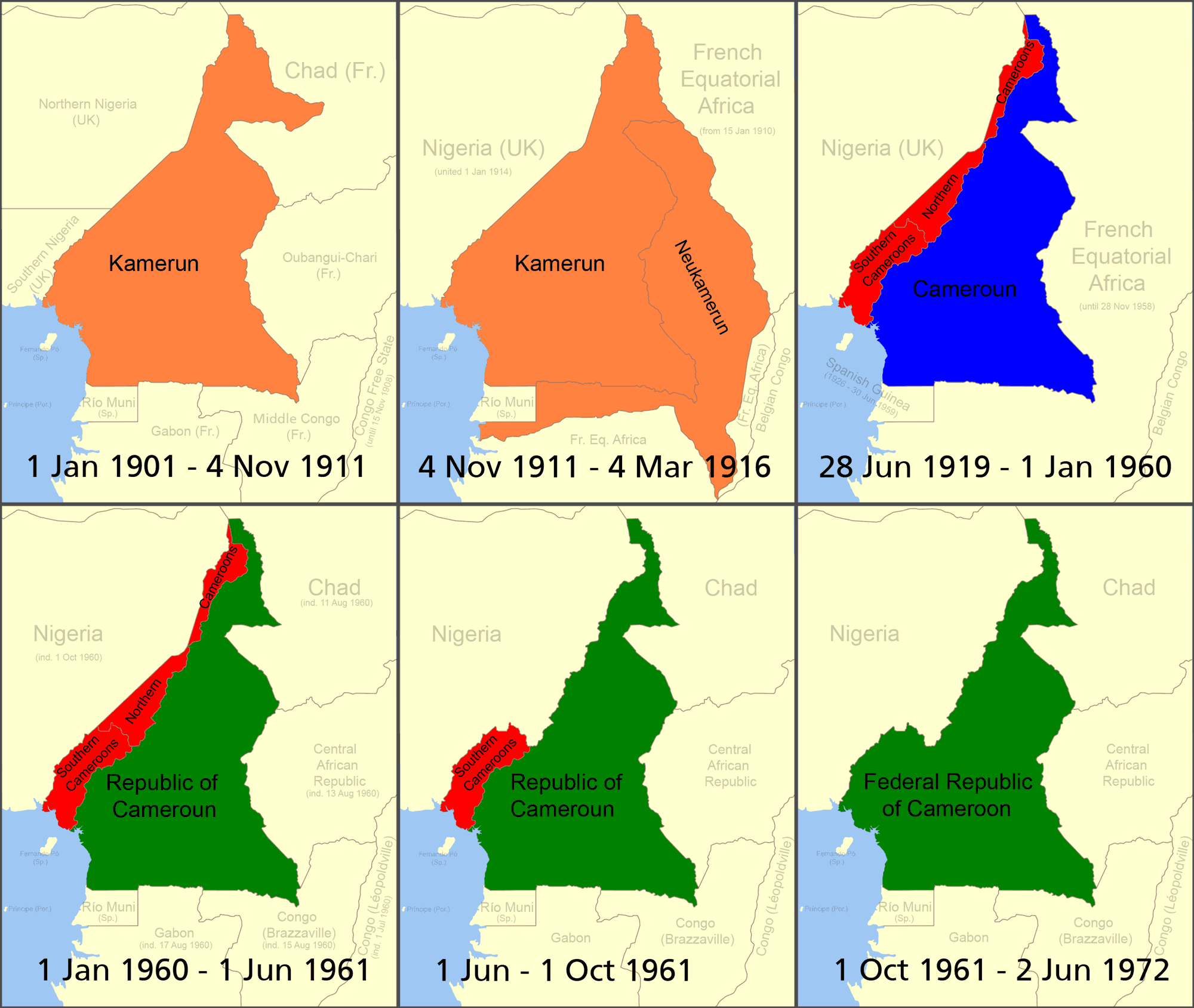
led to French Cameroun’s pseudo-independence on January 01, 1960, the
reunification of British Southern Cameroons and the former French Cameroon a
year later, and the perforce Franco-Ahidjo establishment of a police state
(what is today Cameroon’s anachronistic French-imposed system) to impose
the rule of the French puppet masters
and their puppets who never really had an idea of what Cameroon’s genuine
interests are.
We are already in the third generation of the zombification
and dehumanization of Cameroonians by the political mafia in France which created
and is maintaining the anachronistic system that is disarraying one of Africa’s
most dynamic people; the social engineering of Cameroonians to make them a
docile and political messed up people with no sense of direction is almost
complete. The 42-year regime of the comprador Paul Biya, and the twenty-four-year
rule of his predecessor Ahmadou Ahidjo stand out as major symptoms highlighting
the degree of Cameroon’s political malady, social infection, economic
senselessness, and collective sink into the abyss. FrancAfrique, Mafiafrique, the
French-imposed system of compradors in Cameroon, the Ahidjo-Biya regimes that
have been acting like Nazi-kapos on Cameroonians, and the entire repository
that feeds the retarding system are an
affront to the dignity of right-thinking Cameroonians who are in the overwhelming
majority and who want a humane country with a sense of direction and responsibility.
Cameroon and Cameroonians are less than two decades away from
the completion of the process of social engineering that would make them a
zombified people for the purpose of serving outside forces that do not have Cameroon’s
interest in mind. Unless we start thinking and acting as patriotic Cameroonians
who uphold the civic-nationalist ideals of Kamerunism; and until we understand
that our salvation shall come only when all or most of us act as a team for “The
New Cameroon”, irrespective of the tribe, ethnicity, religion, language or
region we identify with, we would not be able to reverse the current political,
economic, social, and demographic trends that together with this new culture of
‘disrespect, disbelief, disorder, dehumanization, and nihilism’, as well as the
growing ideology of ‘death’, promise to make Cameroon a failed state and Cameroonians
a messed-up people that no true patriot can free. Simply, stopping the
puppetry of the foreign mafia, France, and their Cameroonian compradors who
played no role or are the heirs of those who played no role whatsoever in
Cameroon’s liberation, is our only bargain with our salvation and restoration
of our dignity and sense of purpose.
Dismantling the French-imposed system and founding the “New
Cameroon” must be accomplished within a decade if we must save our potentially
great Cameroon that was conceived to become the prototype and nucleus of “The
New Africa”. That involves ending the gerontocracy and thwarting another
deception that would involve Paul Biya and his French puppet masters choosing someone
who would succeed him and continue the retarding system of compradors that more
than 90% of Cameroonians loathe.
Janvier
Tchouteu
October 24, 2024
Janvier Tchouteu is the author of Triple Agent, Double Cross


